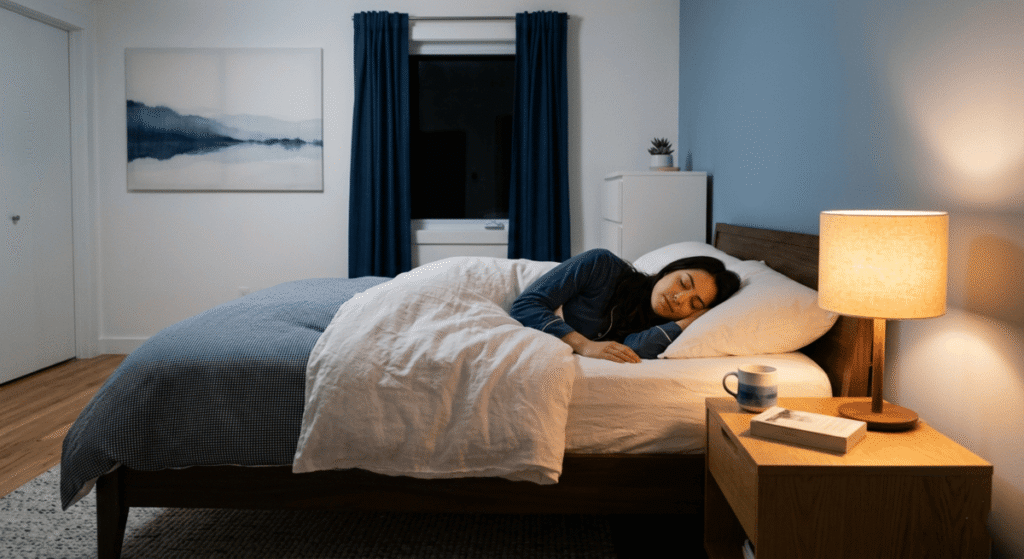


You went to bed on time. You slept a full eight hours. You did everything right — and yet your alarm goes off, and you feel like you barely slept at all.
If you’re wondering why do I wake up tired even after 8 hours of sleep, you’re not alone. It’s one of the most frustrating feelings, especially when you’re trying your best. The good news? The problem usually isn’t how long you sleep. It’s what’s happening during that sleep — and a few habits around it.
Here are five hidden reasons you keep waking up exhausted, plus simple fixes for each one.
1. Your Sleep Quality Is Low (Even If the Hours Look Right)
Eight hours of broken, shallow sleep is not the same as eight hours of deep, restorative sleep. Your body needs to cycle through different sleep stages — including deep sleep and REM sleep — to actually recover.
If you’re tossing and turning, waking up briefly throughout the night, or sleeping lightly, your brain never gets the deep rest it needs. You can spend nine hours in bed and still wake up feeling like you ran a marathon.
The fix: Track your sleep with a free app like Sleep Cycle. Look for patterns — are you waking at the same time each night? That’s a clue that something is disrupting your cycle.
2. You Might Have an Undiagnosed Sleep Disorder
This one surprises a lot of people. Sleep apnea — where your breathing briefly stops during the night — is incredibly common and often goes undetected for years. You don’t always snore loudly or know it’s happening.
If you wake up tired every morning, no matter how much you sleep, feel foggy throughout the day, or get headaches in the morning, these are three warning signs of fatigue worth taking seriously. Sleep apnea, restless leg syndrome, and insomnia-related disorders can all leave you feeling drained despite a full night in bed.
The fix: Talk to your doctor, especially if fatigue is constant. A simple sleep study can rule out or confirm a sleep disorder.
3. Your Sleep Timing Is Working Against Your Body Clock
Your body runs on a circadian rhythm — an internal clock that tells you when to sleep and when to wake. When your sleep schedule shifts around (late nights on weekends, early mornings on weekdays), your body gets confused. This is called social jet lag, and it leaves you feeling groggy even after a long sleep.
Waking up at 7 am Monday after sleeping until 11 am Saturday is a jolt to your system. That’s why so many people feel worse on Monday mornings even after a restful weekend.
The fix: Try to wake up at the same time every day — yes, even weekends. Your body clock stabilizes quickly when it has a consistent anchor.
4. What You Do Before Bed Is Sabotaging Your Sleep
You might be falling asleep fine, but never reaching the deeper stages because of what happened in the hour before bed. Scrolling your phone, watching intense TV, eating a late meal, or having a drink are all common culprits.
Blue light from screens suppresses melatonin — the hormone that tells your brain it’s time to sleep deeply. Alcohol is particularly sneaky. It helps you fall asleep faster but disrupts the second half of your sleep cycle, leaving you restless and groggy by morning.
The fix: Try the 3-2-1 rule for sleeping — stop eating 3 hours before bed, stop drinking alcohol 2 hours before bed, and stop screens 1 hour before bed. It sounds strict, but even applying one of these makes a noticeable difference within a few days.
5. You’re Waking Up at the Wrong Point in Your Sleep Cycle
Sleep happens in roughly 90-minute cycles. If your alarm goes off right in the middle of deep sleep, you wake up feeling disoriented and heavy — even if you technically got enough hours. This is called sleep inertia, and it can last anywhere from 20 minutes to over an hour.
This is also why sometimes you feel more refreshed after 7 hours than 8. You happened to wake naturally at the end of a cycle rather than being yanked out of the middle of one.
The fix: Some people find that 7 hours feels better than 8 for exactly this reason — their cycles align better. You can also use a sleep tracker or smart alarm that wakes you during a lighter sleep phase.
Common Misconceptions About Sleep and Tiredness
“More sleep always means more energy.” Not true. Oversleeping can actually leave you feeling more sluggish. Sleeping 10 or 11 hours regularly can disrupt your rhythm just as much as sleeping too little.
“If I slept 8 hours, something must be medically wrong.” Not necessarily. Most causes of waking up tired are lifestyle-related and very fixable. Start with the simple stuff before assuming the worst.
“Tiredness just means I need more coffee.” Caffeine masks fatigue — it doesn’t fix it. Relying on coffee to function after a full night’s sleep is a sign that something in your sleep quality or habits needs attention.
FAQ
Is it normal to wake up tired after 8 hours of sleep?
It’s common, but it’s not ideal. Waking up consistently tired after a full night usually points to sleep quality issues, a disrupted sleep schedule, or habits that affect your sleep cycles. It’s worth paying attention to.
Is 7 or 8 hours of sleep better?
It depends on the person and the timing. For some people, 7 hours with consistent cycles feels more refreshing than 8 hours of interrupted sleep. Quality and consistency matter more than hitting an exact number.
What is the 3-2-1 rule for sleeping?
It’s a simple wind-down framework: no food 3 hours before bed, no alcohol 2 hours before bed, no screens 1 hour before bed. It helps your body transition into proper sleep mode.
What are three warning signs of fatigue?
Waking up unrefreshed every morning, struggling to concentrate during the day, and feeling the urge to nap even after a full night’s sleep. If all three apply to you regularly, it’s worth speaking to a doctor.
The Takeaway
Waking up tired after 8 hours doesn’t mean you’re broken or that something is seriously wrong. It usually means your sleep quality — not your sleep length — needs some attention.
Start with one small change: consistent wake times, a screen-free hour before bed, or simply paying more attention to how you feel after different amounts of sleep. Small shifts compound quickly when it comes to rest.
Your body wants to recover. Sometimes it just needs the right conditions to actually do it.