


Some days you’re just tired. You push through a busy week, sleep it off on Saturday, and feel like yourself again by Sunday. That’s normal.
But what if rest doesn’t fix it? What if you sleep a full night and still wake up feeling like you never went to bed?
If that sounds familiar, you’re probably wondering: is this just normal tiredness, or is it something more, like chronic fatigue? The short answer is that normal tiredness usually improves with rest and has a clear cause, while chronic fatigue lingers for months, doesn’t respond the way you’d expect to sleep, and can interfere with everyday life.
In this guide, you’ll learn exactly how chronic fatigue vs normal tiredness compare, what makes chronic fatigue different, and when it might be time to talk to a doctor.
Key Takeaways
- Normal tiredness usually has a clear cause and improves with rest, sleep, or a break from activity.
- Chronic fatigue tends to last for months, doesn’t fully improve with rest, and can interfere with daily life.
- Post-exertional malaise, a worsening of symptoms after minor activity, is one of the clearest signs something more than normal tiredness may be going on.
- Unrefreshing sleep, waking up exhausted even after a full night’s sleep, is another common signal.
- Most people experiencing everyday tiredness are not dealing with chronic fatigue syndrome, but persistent or worsening symptoms are worth discussing with a doctor.
Quick Answer: The Core Difference at a Glance
Normal tiredness is your body’s natural response to activity, stress, or poor sleep. It usually gets better once you rest, hydrate, or catch up on sleep.
Chronic fatigue is different. It tends to stick around for weeks or months, doesn’t fully go away with rest, and can make even small tasks feel exhausting. If tiredness has lasted a long time and rest isn’t helping the way it used to, that’s a signal worth paying attention to.
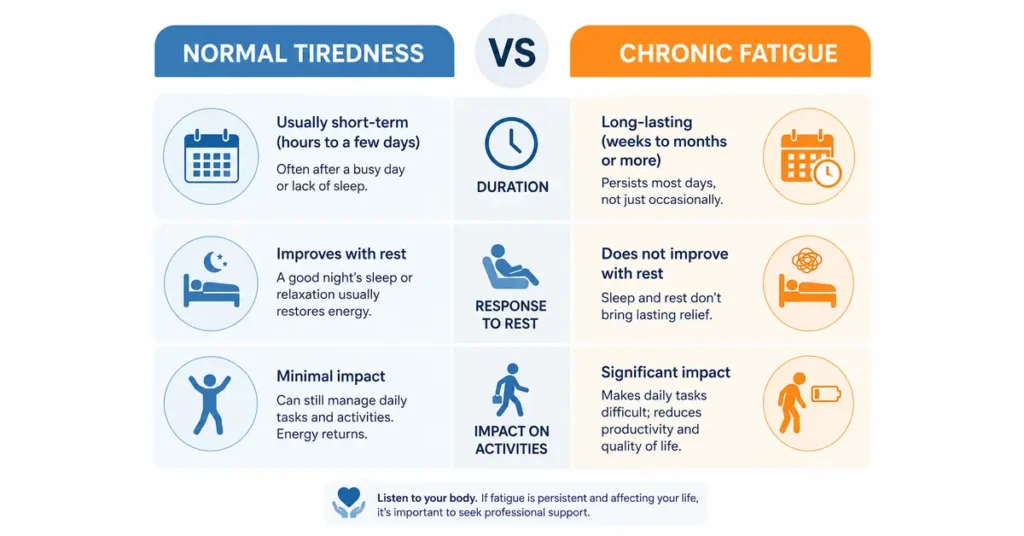
Comparison Table: Normal Tiredness vs. Chronic Fatigue
Here’s a simple side-by-side look at how the two typically compare.
| Normal Tiredness | Chronic Fatigue | |
|---|---|---|
| Duration | Hours to a few days | Weeks to months or longer |
| Response to rest | Improves with sleep or a break | Often doesn’t fully improve, even with plenty of rest |
| Cause | Usually identifiable (busy day, poor sleep, exertion) | May be unclear, or linked to an underlying condition |
| Impact on daily life | Temporary dip in energy | Can limit work, activities, and routines |
| Response to activity | Recovers with rest | May worsen after even minor activity |
If most of your symptoms fall on the left side of this table, you’re likely dealing with everyday tiredness. If several line up with the right side, especially the response to rest and activity, it may be worth reading further and considering a conversation with your doctor.
What Is Normal Tiredness?
Normal tiredness is something everyone experiences. It’s your body’s way of telling you it needs rest, and it usually has a clear trigger.
Common Causes of Normal Tiredness
Everyday tiredness is often tied to lifestyle factors, including:
- Not getting enough sleep
- A physically or mentally demanding day
- Ongoing stress
- Dehydration
- Minor illness, like a cold
- Certain foods can also leave you feeling drained
Sometimes tiredness shows up out of nowhere and feels surprisingly intense. That doesn’t automatically mean something is wrong. For example, you might wake up one morning feeling completely drained for no obvious reason, spend most of the day low on energy, and then find that a change of pace, like getting outside, moving your body, or spending time with a friend, helps reset things. By the end of the day, you’re back to normal and sleep well that night. That kind of pattern, intense but short-lived, and responsive to a change in activity or environment, is a good example of normal tiredness rather than something more persistent.
How Long Normal Tiredness Typically Lasts
Normal tiredness usually resolves within a day or two once you rest, sleep, or reduce whatever was draining your energy. If you’re consistently exhausted for two weeks or more despite taking care of yourself, that’s a sign it may be time to look closer.
What Is Chronic Fatigue?
Chronic fatigue is more than an especially tired day. It’s a persistent, often overwhelming exhaustion that doesn’t fully improve with sleep or rest, and it can last for months.
What Does Chronic Fatigue Actually Feel Like?
Where normal tiredness feels like your energy tank is low, chronic fatigue can feel like the tank itself is broken. Some people describe it as feeling deeper than normal tiredness, or like they’re exhausted in a way that sleep simply doesn’t fix.
Everyday tasks that used to feel easy, like grocery shopping, climbing a flight of stairs, or getting through a workday, can suddenly feel like major efforts. You might sleep for hours and still wake up feeling like you never rested at all.
Common Causes and Associations
Chronic fatigue doesn’t always have one clear cause. It can be linked to:
- Infections or illness
- Hormone imbalances
- Nutritional deficiencies
- Ongoing stress
- Underlying medical conditions
It’s also worth knowing that Long COVID has been associated with fatigue patterns similar to chronic fatigue, including PEM and unrefreshing sleep, though researchers are still learning more about that connection.
Does Chronic Fatigue Go Away With Rest?
This is one of the biggest differences between normal tiredness and chronic fatigue. Normal tiredness responds to rest. Chronic fatigue often doesn’t.
You could sleep a full eight hours, or even longer, and still wake up exhausted. That disconnect, doing everything “right” and still feeling depleted, is one of the clearest signs that something beyond ordinary tiredness may be going on.
What Is Unrefreshing Sleep?
Unrefreshing sleep means waking up feeling like you haven’t slept at all, even after a full night. You got the hours in, but your body doesn’t feel restored.
Sleep researchers don’t have one single, agreed-upon way to define this experience, but it’s a well-recognized complaint, especially among people dealing with chronic fatigue. If this happens occasionally, it’s probably not a red flag. If it happens night after night for weeks, it’s worth mentioning to a doctor.
Post-Exertional Malaise: The Crash That Sets Chronic Fatigue Apart
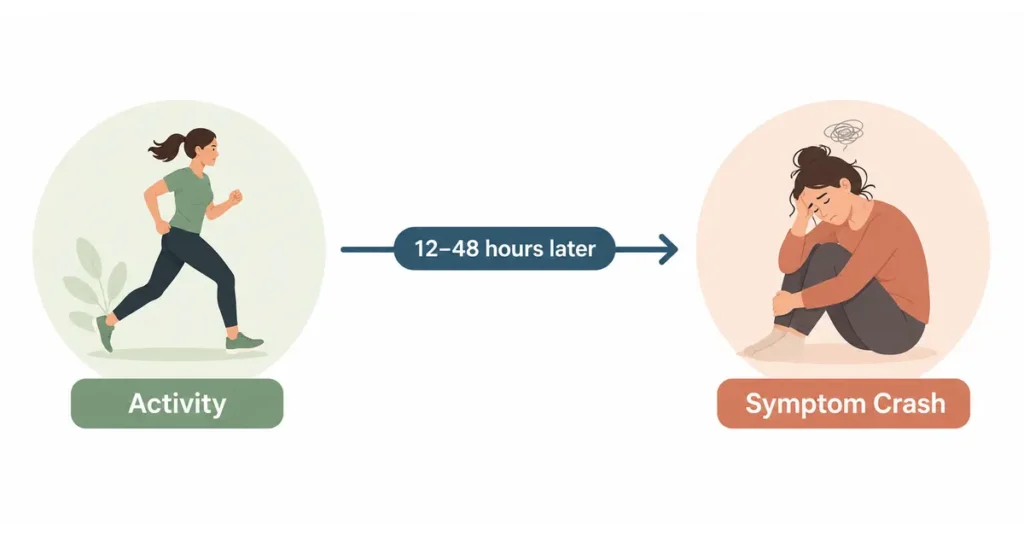
Post-exertional malaise, often shortened to PEM, is considered one of the clearest signs of chronic fatigue syndrome. In plain terms, PEM means your symptoms get worse after physical or mental effort, even effort that used to feel completely manageable.
According to the CDC, this worsening typically shows up 12 to 48 hours after the activity, and it can last for days or even weeks.
What a PEM Crash Actually Looks Like
Imagine doing something ordinary, like a short walk, a grocery run, or even a longer conversation. For most people, that kind of activity might leave them a little tired, and they bounce back quickly. With PEM, the crash doesn’t show up right away. It arrives a day or two later, and it can hit hard: exhaustion, brain fog, and body aches that make it difficult to function.
This delayed, disproportionate reaction to minor activity is different from the normal muscle soreness you might feel after a hard workout. It’s also different from simply feeling tired after a long day. PEM is the body’s exaggerated, delayed response to effort that shouldn’t have caused this much trouble.
Is This Just Tiredness, or Could It Be Chronic Fatigue Syndrome?
If you’ve read this far and you’re still not sure which one applies to you, that’s completely understandable. The line between “really tired” and “something more” isn’t always obvious.
Ask Yourself These Questions
These questions can’t diagnose anything, but they can help you think through your own pattern:
- Has this lasted for more than a few weeks, even after resting?
- Do you wake up feeling exhausted, even after a full night’s sleep?
- Does even minor activity leave you feeling worse a day or two later?
- Is your tiredness affecting your ability to work, socialize, or manage daily tasks?
If you answered yes to several of these, it may be worth talking to a healthcare provider.

You’re Not Being Lazy, Understanding the Stigma
If part of you is wondering whether you’re just being lazy, you’re not alone in that thought, and you’re very likely wrong about yourself. Chronic fatigue is a real, physical experience, not a character flaw or a lack of willpower.
It can be genuinely hard for people around you to understand something they can’t see. That doesn’t make what you’re feeling any less real.
Signs It Might Be Chronic Fatigue Syndrome (CFS/ME)
Chronic Fatigue Syndrome, also called Myalgic Encephalomyelitis (ME/CFS), is a distinct medical condition, not just a severe version of being tired.
According to the CDC, ME/CFS involves a specific set of core symptoms, and a diagnosis generally requires several of them together, including fatigue that isn’t improved by rest, post-exertional malaise, and unrefreshing sleep. There’s currently no single lab test that confirms ME/CFS, which is part of what makes it tricky to diagnose.
The CDC estimates that hundreds of thousands to a few million Americans live with ME/CFS, and research suggests a large share of cases go undiagnosed. This is a condition healthcare providers take seriously, even though it doesn’t always get talked about.
When to See a Doctor About Fatigue
If you’ve been resting, managing stress, eating well, and staying hydrated for two weeks or more and your energy still hasn’t improved, that’s a reasonable point to check in with a healthcare provider, according to Mayo Clinic guidance.
The good news is that most people reading this are probably dealing with ordinary, if frustrating, tiredness rather than a chronic condition. But persistent, unexplained fatigue, especially when paired with the PEM pattern or unrefreshing sleep described above, deserves a proper conversation with someone who can look at your full picture.
Frequently Asked Questions
Does chronic fatigue go away with rest?
Not usually, at least not the way normal tiredness does. People with chronic fatigue often find that even extended rest doesn’t fully restore their energy, which is one of the key differences from everyday tiredness.
What does post-exertional malaise mean?
It means your symptoms get noticeably worse after physical or mental effort, often 12 to 48 hours later, according to the CDC. It’s considered one of the clearest signs of chronic fatigue syndrome.
Is chronic fatigue the same as being sleepy?
No. Sleepiness is about struggling to stay awake. Chronic fatigue is more about low physical and mental energy, even if you’re not necessarily drowsy.
Is chronic fatigue syndrome the same as ME/CFS?
Yes, they refer to the same condition. ME/CFS stands for Myalgic Encephalomyelitis/Chronic Fatigue Syndrome, and both terms describe the same diagnosis.
How long does normal tiredness typically last?
Normal tiredness usually improves within a day or two of rest. If exhaustion continues for two weeks or more despite resting, it’s worth having it checked out.
When should I see a doctor about fatigue?
If rest, stress management, good nutrition, and hydration haven’t helped after two weeks or more, it’s a good time to talk to a healthcare provider.
Conclusion
Most tiredness is nothing more than your body asking for rest, and it responds well once you give it what it needs. But if your exhaustion has stuck around for weeks, doesn’t improve with sleep, or gets worse after minor activity, that pattern is worth paying attention to.
You know your body better than anyone. If something feels off, trust that instinct enough to bring it up with a doctor.
Medical Disclaimer: This article is for informational purposes only and is not a substitute for professional medical advice, diagnosis, or treatment. If you’re dealing with persistent or worsening fatigue, please consult a qualified healthcare provider for proper evaluation.
Sources & References
- Centers for Disease Control and Prevention (CDC). “ME/CFS Basics.” cdc.gov/me-cfs/about
- Centers for Disease Control and Prevention (CDC). “Symptoms of ME/CFS.” cdc.gov/me-cfs/signs-symptoms
- Centers for Disease Control and Prevention (CDC). “Strategies to Prevent Worsening of Symptoms.” cdc.gov/me-cfs/hcp/clinical-care
- Centers for Disease Control and Prevention (CDC). ME/CFS toolkit, “What Is ME/CFS?” cdc.gov/me-cfs/pdfs/toolkit/what-is-mecfs_508.pdf
- Mayo Clinic. “Fatigue.” mayoclinic.org/symptoms/fatigue
- Mayo Clinic Press. “Why You’re Always Tired: Home Remedies for Fatigue.” mcpress.mayoclinic.org
- Cleveland Clinic. “Fatigue: Causes & Treatment.” my.clevelandclinic.org/health/symptoms/21206-fatigue
- Hypersomnia Foundation. “Unrefreshing Sleep” glossary entry. hypersomniafoundation.org
- WebMD. “How Tired Is Too Tired?” webmd.com/balance/how-tired-is-too-tired