


You sat at a desk all day. You didn’t lift anything heavy, run anywhere, or do a single push-up. And yet by 6 PM, you’re wiped out.
If that sounds familiar, you’re not imagining it. Stress can drain your energy just as much as physical exertion, sometimes even more.
So why does stress make you tired, even on a day like that? Here’s what’s actually happening inside your body when it does, and how to tell if that’s what’s behind your exhaustion.
Key Takeaways
- Stress activates your body’s fight-or-flight response, which burns real energy even when you’re sitting still.
- Cortisol and adrenaline are released whether the threat is physical or purely mental, like a stressful email.
- Mental exhaustion and physical exhaustion feel different because they come from different systems in your body.
- Stress can wreck your sleep quality even when you’re getting enough hours in bed.
- Feeling “tired but wired” is a real and common pattern, not a contradiction.
- If this exhaustion sticks around for weeks or months, it may be worth looking at whether it’s tipping into something more chronic.
Yes, Stress Fatigue Is Real (And You’re Not Just Lazy)
Stress-related fatigue is real. It happens when your body’s stress response stays switched on, using up energy even though you haven’t moved a muscle.
If you’ve been wondering why you’re exhausted even though you didn’t do anything, this is your answer. Your body doesn’t actually know the difference between a physical threat and a mental one.
A looming deadline, a tense conversation, or a spiral of “what if” thoughts can trigger the same internal alarm system as running from danger. Your body responds accordingly, and that response costs energy.
So no, you’re not lazy. You’re not making it up. Something is genuinely happening inside you, and it deserves an actual explanation instead of a guilt trip.
What’s Actually Happening in Your Body When Stress Wears You Out
To understand why stress leaves you so drained, it helps to know what your body is doing behind the scenes.
The Fight-or-Flight Response, Explained Simply
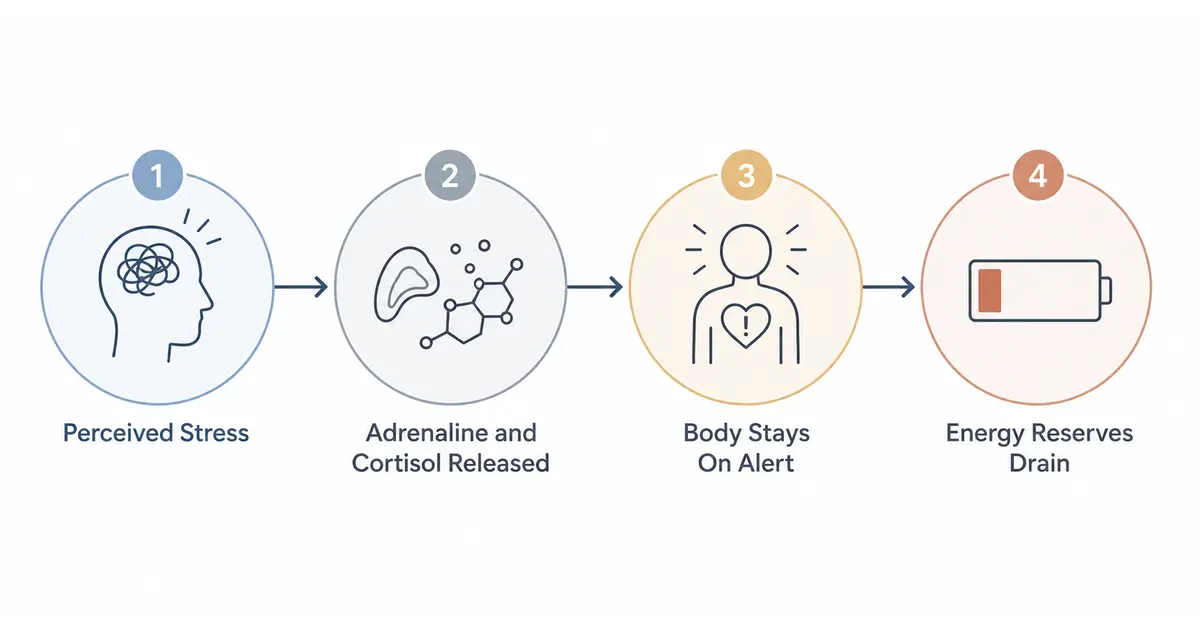
When your brain senses a threat, real or perceived, it sets off a chain reaction. Your sympathetic nervous system fires first, releasing adrenaline within seconds.
This is your fight-or-flight response. It’s designed to prepare you to either face danger or run from it.
Shortly after, a slower system called the HPA axis kicks in. The HPA axis is a communication loop between three organs in your body: the hypothalamus, the pituitary gland, and the adrenal glands.
Its main job is to release cortisol, often called the stress hormone. Cortisol keeps your body alert and ready to respond for as long as the stress continues.
Why This Response Drains Energy Even Without Physical Movement
Here’s the part that explains your specific situation. Adrenaline and cortisol don’t check whether you’re actually in danger before they activate.
A tense meeting, a pile of unread emails, or a nagging worry can trigger the same stress-response systems as a real emergency. Your heart rate rises. Your muscles tense. Your body prepares for action that never comes.
That preparation isn’t free. It uses up real physiological resources, the same way revving a car engine burns gas even if the car never leaves the driveway.
So even though you spent the day sitting at your desk, your body may have spent that day running an internal engine at a low but constant hum. By evening, you’re running on empty, without ever having gone anywhere.
Mental Exhaustion vs. Physical Exhaustion: Why They Feel So Different
One of the most confusing parts of stress fatigue is that it doesn’t feel like the tiredness you get after a workout. That’s because it isn’t the same thing.
What Mental Exhaustion Feels Like
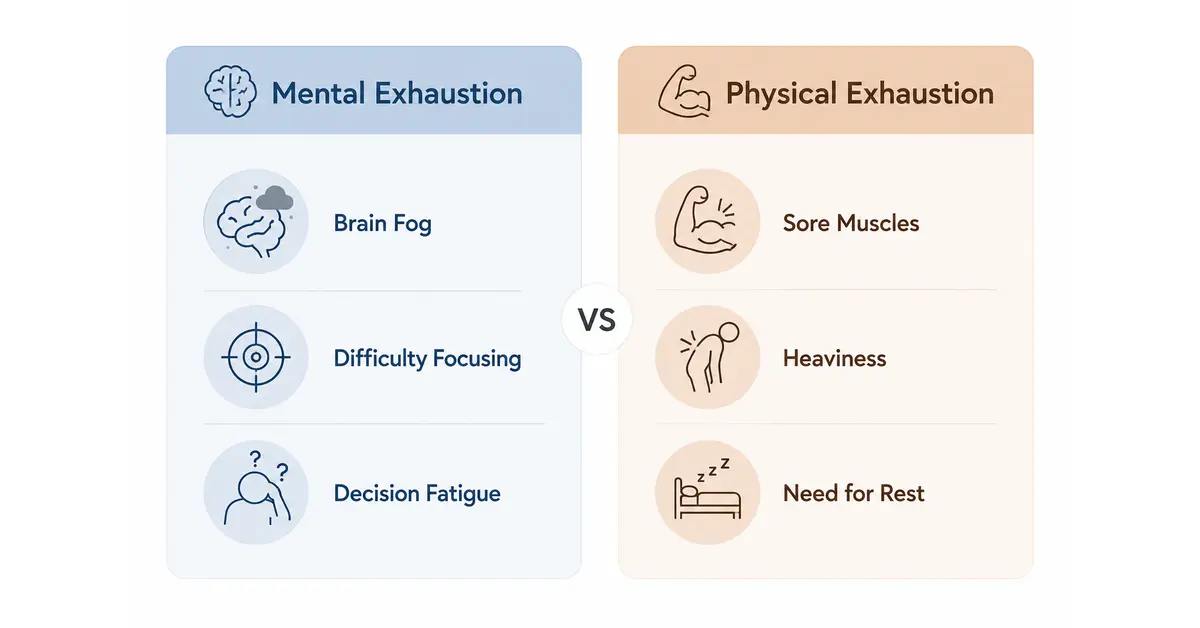
Mental exhaustion usually shows up as brain fog, trouble focusing, and a heavy, foggy feeling behind your eyes. You might reread the same sentence three times and still not absorb it.
Simple decisions can start to feel oddly difficult. What to eat, what to wear, which email to answer first- all of it can feel like more effort than it should.
This is sometimes called decision fatigue, and it’s a real, distinct phenomenon. Making choice after choice throughout the day is thought to place sustained demand on your prefrontal cortex, the part of your brain responsible for planning and self-control.
Some emerging research points to a possible biological reason for this feeling. One study from the Paris Brain Institute suggests cognitive fatigue may be linked to a buildup of a neurotransmitter called glutamate in the lateral prefrontal cortex, which could help explain why sustained mental effort leaves your brain unable to push much further.
What Physical Exhaustion Feels Like
Physical exhaustion is more straightforward. Your muscles feel heavy or sore, your body wants to lie down, and rest genuinely helps.
If you’ve been lifting boxes or going for a long run, this is the tiredness you’d expect. It’s tied directly to muscular effort and recovery.
Why Stress Produces the Mental Kind, Not the Physical Kind
Stress rarely asks anything of your muscles. It asks something of your mind instead: constant vigilance, constant “what if” thinking, constant low-grade alertness.
That’s why stress-driven exhaustion tends to feel foggy and heavy in your head rather than sore in your body. You haven’t worked your muscles. You’ve worked your nervous system.
Think of it like the difference between running a marathon and sitting through six hours of back-to-back meetings. Neither one moved much physically, but only one of them leaves your legs sore. The other leaves your mind wrung out.
Why Resting Doesn’t Always Fix It
If lying down and doing nothing hasn’t actually made you feel less tired, there’s a reason for that too.
How Stress Disrupts Sleep Quality (Even If You’re in Bed Long Enough)
Stress doesn’t just affect how you feel during the day. It changes what happens once you finally get to bed.
Chronic stress can reduce the amount of time you spend in deep sleep and disrupt REM sleep, the stages your body relies on most for real recovery. You can technically log eight hours and still wake up feeling like you barely slept.
That’s because sleep quality matters just as much as sleep quantity, and stress specifically targets quality.
The “Tired But Wired” Paradox
You might also notice the opposite problem: you’re exhausted, but your mind won’t settle down enough to actually fall asleep.
This is sometimes called being “tired but wired,” and it’s a genuine, well-recognized pattern. Elevated cortisol in the evening, when it should naturally be dropping, can keep your brain alert even while your body is begging for rest.
It’s frustrating, but it’s not a personal failing. It’s your stress hormones simply doing their job at the wrong time.
Signs Your Tiredness Is Coming From Stress
So how do you know if stress is actually behind your exhaustion, rather than something else? A few patterns tend to show up together.
- You feel drained after mentally demanding days, even ones that involved zero physical activity
- You’re tired for no obvious reason, without a clear physical cause like illness or poor sleep
- You feel burned out despite not having done any physical labor
- Small decisions feel exhausting to make
- You struggle to relax even when you finally get downtime
- Your energy dips after emotionally tense situations, like a difficult conversation or a stressful deadline
These are common patterns people notice, not a clinical checklist. Fatigue can also stem from causes unrelated to stress, like poor sleep, thyroid issues, anemia, or depression, so if several of these sound familiar but things don’t improve, it’s still worth checking in with a healthcare provider.
When Stress Fatigue Becomes Chronic
Occasional stress fatigue is a normal, temporary response. But when stress doesn’t let up for weeks or months, the effects can start to build.
Researchers describe this cumulative effect as allostatic load, essentially the physical wear and tear your body accumulates from staying in a stressed state for too long. Left unchecked, chronic stress has been linked to ongoing sleep problems, a weakened immune system, and other longer-term health effects. Individual responses vary quite a bit here — allostatic load is a useful framework, not a self-diagnosis test.
This kind of ongoing exhaustion is different from the everyday tiredness this article focuses on. If your fatigue has been persistent for a long stretch of time, it’s worth reading about the difference between chronic fatigue and normal tiredness to understand where your experience falls.
A Personal Note on Managing Stress
Not all stress is created equal, and that distinction matters more than most explanations give it credit for.
I play football on weekends, usually as goalkeeper. Every time the ball comes toward me, I feel a jolt of stress. But that kind of stress actually helps. It sharpens my focus and keeps me locked in on stopping the ball.
The harmful kind of stress is different. It’s the mental loop of “what if this happens” over something that hasn’t happened yet and might never happen. That’s the stress that quietly wears you down over time.
For that kind, the basics genuinely do work, at least for me. Once I started taking exercise seriously, alternating strength training with cardio and weekend football, my stress dropped without me even trying that hard.
I also keep a running list of more than ten things that genuinely make me happy, saved in a simple note on my phone. Every day, I pick one and actually do it, often planning the night before by asking myself what tomorrow’s “joy thing” will be.
It sounds small. But consistently making space for something that makes you happy adds up. In my experience, since I started doing it, I’ve noticed fewer arguments at home, better sleep, and far less of that completely drained feeling at work.
Frequently Asked Questions
Is stress fatigue a real thing or am I just lazy?
Stress-related fatigue is a real, well-documented response to your body’s stress system staying active. Feeling exhausted after a mentally demanding day isn’t laziness; it’s your fight-or-flight response and cortisol levels doing exactly what they’re designed to do.
Can stress alone cause exhaustion without physical exertion?
Yes. Your body’s stress response activates whether the trigger is physical danger or purely mental, like a work deadline. That hormonal response uses real energy even if you never move from your chair.
Why does stress make you tired even when you rest?
Stress can disrupt the quality of your sleep, reducing deep sleep and REM sleep even if you’re spending enough hours in bed. It can also keep cortisol elevated in the evening, making it harder to fully relax even during downtime.
Can stress make you tired but unable to sleep?
Yes, this “tired but wired” feeling is common. Elevated stress hormones in the evening can keep your mind alert even while your body feels exhausted, making it hard to actually fall asleep.
What are the signs of stress fatigue?
Common signs include feeling drained after mentally demanding days, struggling with small decisions, difficulty relaxing during downtime, and low energy following emotionally tense situations, even without any physical exertion involved.
Can extreme stress prevent you from feeling tired even after being awake a long time?
In some cases, yes. A surge of adrenaline during high-stress moments is thought to temporarily mask tiredness by keeping your body in an alert state, though this effect usually fades once the stress response calms down.
Final Thoughts
Feeling exhausted after a day that didn’t involve any physical effort isn’t a sign that something’s wrong with you. It’s a sign that your stress response has been quietly working overtime.
Understanding the difference between mental and physical exhaustion is the first step toward taking your tiredness seriously instead of dismissing it. From there, small, consistent habits, like regular movement or making space for things that genuinely bring you joy, can make a real difference over time.
If this kind of exhaustion has been sticking around for weeks rather than days, it may be worth exploring whether it’s shifted into something more chronic.
Medical Disclaimer: This content is for informational and educational purposes only and is not intended to replace professional medical advice, diagnosis, or treatment. I am not a licensed healthcare professional. If you have persistent, severe, or concerning symptoms of fatigue, consult a qualified healthcare provider before making decisions about your health.
Sources & References
- Cleveland Clinic. Hypothalamic-Pituitary-Adrenal (HPA) Axis. https://my.clevelandclinic.org/health/body/hypothalamic-pituitary-adrenal-hpa-axis
- Mayo Clinic. Chronic Stress Puts Your Health at Risk. https://www.mayoclinic.org/healthy-lifestyle/stress-management/in-depth/stress/art-20046037
- Sleep Foundation. Stress and Insomnia. https://www.sleepfoundation.org/insomnia/stress-and-insomnia
- Paris Brain Institute. Cognitive Fatigue: New Insight on Biological Mechanisms. https://parisbraininstitute.org/news/cognitive-fatigue-new-insight-biological-mechanisms
- Allostatic Load: Towards a Consensus Definition. National Institutes of Health / PMC. https://pmc.ncbi.nlm.nih.gov/articles/PMC10620736