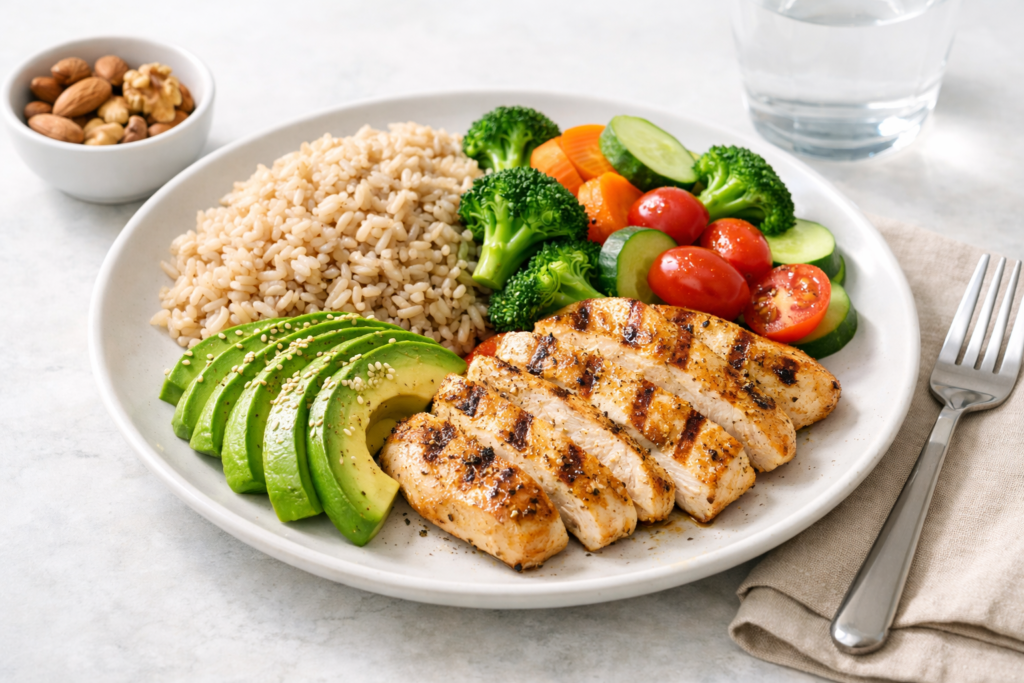


Some days, eating just doesn’t happen the way it should. Meetings run long, plans get busy, and lunch turns into a granola bar eaten at your desk.
If this happens once in a while, your body usually bounces back fine. But if you’ve been wondering whether you’re dealing with real symptoms of not eating enough, you’re not imagining it.
Your body is remarkably good at signaling when it needs more fuel. This guide walks through what those signals actually look like, why they happen, and what to do next.
Key Takeaways
- Undereating shows up through physical, mental, and hormonal signs, not just hunger.
- A quick self-check can help you spot the difference between a busy week and a real pattern.
- Hunger hormones like ghrelin and leptin shift noticeably when you consistently eat too little.
- Some symptoms, like dizziness or missed periods, are worth mentioning to a doctor sooner rather than later.
- Fixing undereating usually starts with small, steady changes, not a dramatic overhaul.
Quick Self-Check: Are You Not Eating Enough?
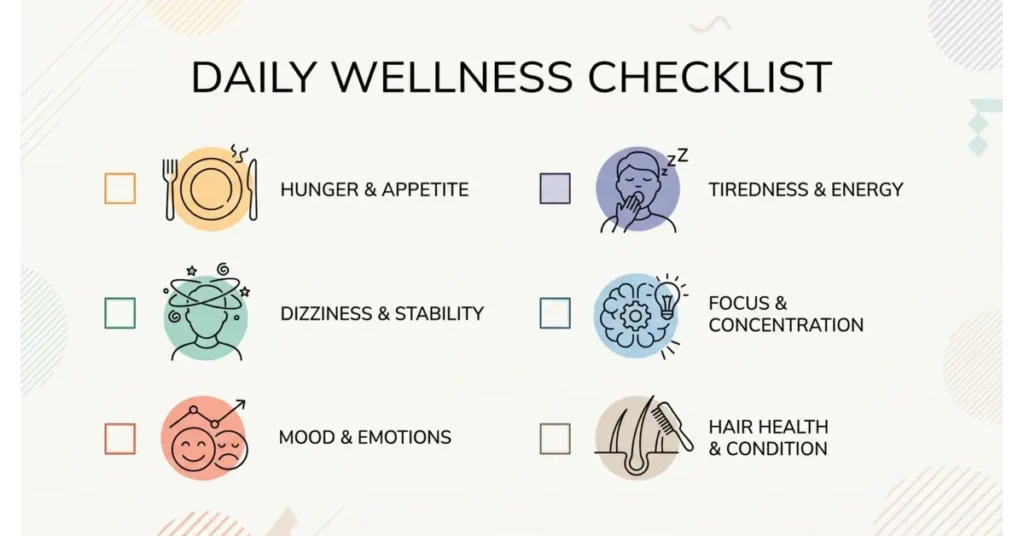
Before diving into the full list, here’s a fast way to gauge where you stand. If several of these sound familiar over the past couple of weeks, it’s worth paying closer attention.
- You feel hungry again shortly after eating, or rarely feel satisfied by meals
- You’re more tired than usual, even after a full night’s sleep
- You’ve felt dizzy or lightheaded when standing up quickly
- You’re having trouble focusing on simple tasks
- Your mood has felt noticeably more irritable or flat
- You’ve noticed more hair in your brush or shower drain than normal
One or two of these on their own don’t mean much. Several together, especially if they’ve lasted more than a week or two, point toward not eating enough.
Occasional Undereating vs. a Chronic Pattern — What’s the Difference?
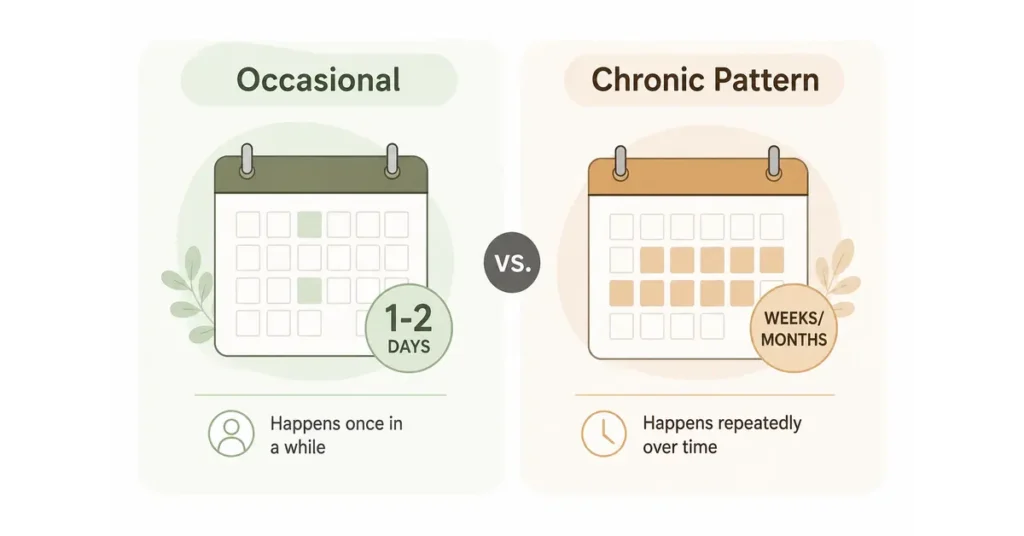
Not every skipped lunch is a problem. Your body can handle the occasional short day without much fallout.
The real concern is a chronic pattern: consistently eating less than your body needs, week after week, whether that’s intentional or not.
For context, most adult women need somewhere between 1,600 and 2,400 calories a day, and most adult men need between 2,000 and 3,000, depending on age and activity level, according to the Dietary Guidelines for Americans. These are broad ranges, not strict targets, but they give you a sense of scale.
If you’re regularly falling well below your own personal range for more than a few days at a time, that’s when your body starts adapting in ways you can feel.
It’s also worth naming something directly: if cutting back on food feels intentional, hard to stop, or tied to anxiety around eating, that’s a different situation than simply being too busy to eat. It deserves support from a professional who specializes in eating behavior, not just a reminder to eat more.
Why Undereating Affects Your Body This Way
Your body doesn’t just quietly run on less fuel. It actively responds, and those responses are what create most of the symptoms on this list.
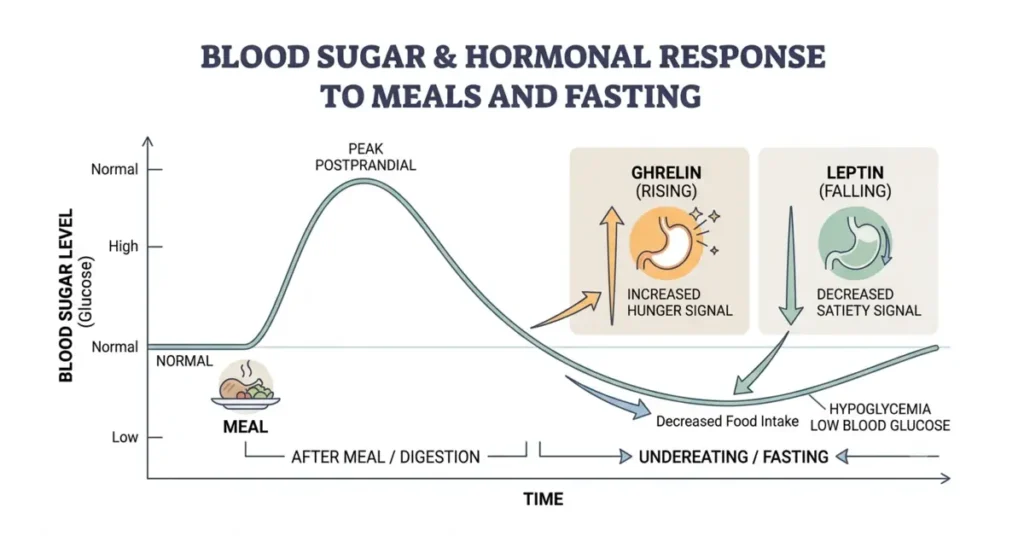
When you eat less than your body needs, a hormone called ghrelin rises. Ghrelin is often nicknamed the “hunger hormone” because its whole job is to make you want to eat.
At the same time, leptin, the hormone that signals fullness, drops. In one controlled study of men with overweight, just three days of severe calorie restriction lowered leptin levels by roughly 31%. That’s a fast, noticeable shift, and it points to a big part of why undereating can leave you thinking about food constantly.
There’s also a blood sugar piece to this. Without steady meals, your blood sugar can dip lower than it should, which is part of what triggers the shaky, foggy feeling many people describe.
Your basal metabolic rate, or BMR, adds another layer. BMR is simply the number of calories your body burns just to keep functioning at rest, things like breathing, circulating blood, and keeping your organs running. It typically makes up 60 to 70% of the energy you use in a day. When you’re not eating enough to support that baseline, your body starts making trade-offs, and those trade-offs show up as symptoms.
12 Symptoms of Not Eating Enough
1. Constant Hunger or Preoccupation with Food
This one seems obvious, but it’s easy to dismiss. If you’re eating regular meals and still feel hungry an hour later, or find yourself thinking about your next meal all day, your intake likely isn’t matching your needs.
2. Low Energy and Feeling Tired All the Time
Food is fuel, plain and simple. When you’re not taking in enough of it, your body has less to work with, and fatigue is often the first thing people notice.
This kind of tiredness tends to feel different from a bad night’s sleep. It’s a heavier, all-day drag that doesn’t lift much with rest. If low energy is your main concern, it’s worth also looking at which foods might be draining you further and understanding why you might still feel tired even after a full night’s sleep.
3. Dizziness or Feeling Lightheaded
Dizziness after standing up, or a lightheaded feeling in the afternoon, is often tied to low blood sugar. For most people without diabetes, blood sugar is generally considered low once it drops below about 55 mg/dL, though symptoms can appear even sooner for some individuals.
If this happens occasionally, eating something can usually settle it. If it’s a regular occurrence, that’s a signal worth taking seriously.
4. Trouble Concentrating or Brain Fog
Your brain runs almost entirely on glucose. When your intake is inconsistent, so is your fuel supply, and for many people, concentration is one of the first things to slip.
If you’ve been rereading the same email three times or losing your train of thought mid-conversation, undereating could be part of the picture.
5. Headaches
Low blood sugar and dehydration often travel together, and both can trigger headaches. If your headaches tend to show up hours after your last meal, that timing is worth noticing.
6. Mood Swings and Irritability
Ever felt genuinely short-tempered over something small, only to realize you hadn’t eaten in hours? For a lot of people, that’s not a coincidence. Blood sugar dips and hunger hormone shifts can both play into mood, and irritability is often one of the earlier signs that your body wants food.
7. Feeling Cold More Often Than Usual
Your body generates heat partly through the process of digesting and using food. When intake drops, that internal heat production can drop with it, leaving you reaching for a sweater more than usual.
8. Hair Loss, Brittle Nails, or Skin Changes
This connection is real, though researchers describe it as somewhat inconsistent from person to person. One study of patients experiencing a type of hair shedding called telogen effluvium found meaningfully higher rates of vitamin D, iron (ferritin), and zinc deficiency compared to expected levels. A separate review looking at hair loss after bariatric surgery, where calorie intake drops sharply, found similar links to protein, iron, zinc, and B12 shortfalls.
Not everyone who undereats will notice hair changes, but if you’re already seeing more shedding than normal, low intake is a reasonable thing to look at.
9. Constipation or Digestive Changes
Eating too little has been linked to slower digestion. A large U.S. study using national health data found that women with lower calorie intake, in the range of roughly 1,200 to 1,500 calories a day, had a higher likelihood of constipation than women eating more. This is an association the researchers observed, not a guaranteed outcome for every individual, but it lines up with what many people experience firsthand.
10. Muscle Weakness
When your body isn’t getting enough energy from food, it starts looking for backup fuel sources, and muscle tissue is one of them. Over time, this can show up as feeling physically weaker or less capable during normal activities.
11. Irregular or Missed Periods
This is one of the more serious signs on this list, and it deserves direct attention. A formal clinical guideline from the Endocrine Society describes how energy deficit, whether from reduced food intake, intense exercise, or both, can suppress the hormone signals that regulate the menstrual cycle. In one study cited in that research, a fairly modest drop in energy availability was enough to significantly reduce a key reproductive hormone’s activity.
The reassuring part is that this is generally reversible once energy intake improves. But missed or irregular periods are a clear signal to talk to a doctor rather than wait it out.
12. Getting Sick More Often
Nutrients support your immune system in ways that aren’t always obvious day to day. If you’ve been catching every cold that goes around lately, chronic undereating may be one contributing factor, alongside sleep, stress, and everyday exposure.
What Happens If Undereating Continues Long-Term
Occasional undereating rarely causes lasting harm. Chronic undereating is a different story.
Over time, your metabolism can slow as your body tries to conserve energy with what little it’s getting. This is sometimes called metabolic adaptation, and it’s part of why extreme, long-term restriction can backfire.
In more severe or prolonged cases, undereating can cross into what’s medically defined as malnutrition, which the World Health Organization describes broadly as an imbalance between the nutrients your body needs and what it’s actually getting. Malnutrition isn’t just about weight. It affects nearly every system, from bone density to immune function to organ health.
None of this is meant to alarm you. It’s meant to explain why catching these signs early, rather than pushing through them for months, genuinely matters.
When to See a Doctor
Most of the symptoms above can improve once you start eating more consistently. But a few situations call for professional guidance rather than a wait-and-see approach.
Reach out to a doctor if you’re experiencing frequent dizziness or symptoms that could point to low blood sugar, missed or irregular periods, unexplained and rapid weight loss, or if you notice several symptoms stacking up at once and lasting more than a couple of weeks.
A doctor or registered dietitian can also help rule out other causes, since fatigue, dizziness, and mood changes can stem from things unrelated to food intake, like thyroid issues or iron-deficiency anemia. It’s worth having that conversation rather than guessing.
And again, if restricting food feels intentional or emotionally difficult to change on your own, a healthcare provider who specializes in eating behavior is the right next step, not a general nutrition tip.
How to Start Eating Enough Again
You don’t need to overhaul your entire diet overnight. Small, consistent changes tend to work better than dramatic ones, and they’re a lot easier to actually stick with.
A simple starting point is building a source of protein into your first meal of the day. Something as straightforward as eggs at breakfast can make a noticeable difference in how steady your energy feels through the morning.
For meals later in the day, pairing a carbohydrate base, like oatmeal, with nuts, seeds, and a source of dairy or plant milk can round things out with protein, fiber, and healthy fats all in one bowl. Some people find that prioritizing protein and fiber, rather than relying mostly on carbohydrates, genuinely changes how they feel day to day — more energy, healthier-looking hair, better overall vitality. That said, this reflects one practical approach rather than a universal prescription, and what works well will vary from person to person.
Setting regular meal times, even just three anchor points in your day, can also help prevent the long gaps that tend to trigger the symptoms above. If you’re not sure where your intake actually stands, tracking food for a few days, or talking to a registered dietitian, can give you a clearer picture than guessing.
Frequently Asked Questions
How much is “not eating enough,” really?
It depends on your individual needs, but as a general reference point, most adult women need roughly 1,600 to 2,400 calories a day and most adult men need 2,000 to 3,000, based on federal dietary guidelines. Falling well below your personal range for more than a few days at a time is when symptoms tend to show up.
Can you not realize you’re undereating?
Yes, this happens more often than people expect. Busy schedules, appetite changes, or simply eating foods that are filling but calorie-light can lead to undereating without any conscious restriction involved.
How long before symptoms show up after undereating?
It varies by person and by symptom. Fatigue and irritability can appear within a day or two, while changes like hair shedding or irregular periods usually take weeks or longer to become noticeable.
Can not eating enough cause headaches?
It can. Headaches are commonly linked to the blood sugar dips and dehydration that often accompany undereating, especially if meals are skipped for long stretches.
What are the first signs you’re not eating enough?
For most people, hunger, low energy, and difficulty concentrating tend to show up earliest, often within the first day or two of consistently eating too little.
Is it possible to eat enough food but still be undernourished?
Yes. Calorie intake and nutrient quality aren’t the same thing. Someone can eat enough total calories while still falling short on key nutrients like iron, protein, or B vitamins, which can produce some of the same symptoms described above.
Conclusion
Your body rarely stays quiet when it’s running on too little. The symptoms of not eating enough — hunger, fatigue, brain fog, and the rest of this list — are its way of asking for more support.
If a few of these symptoms sound familiar, start small. Add a protein source to one meal today, and pay attention to how you feel over the next few days.
And if anything on this list, especially missed periods or ongoing dizziness, feels like more than a busy-week fluke, don’t wait to bring it up with a doctor.
Medical Disclaimer: This content is for informational and educational purposes only and is not intended to replace professional medical advice, diagnosis, or treatment. I am not a licensed healthcare professional. If you have persistent, severe, or concerning symptoms, including missed periods, ongoing dizziness, or signs of disordered eating, please consult a qualified healthcare provider before making decisions about your health.
Sources & References
- Dietary Guidelines for Americans, 2015–2020, U.S. Department of Health and Human Services / U.S. Department of Agriculture — health.gov/dietaryguidelines/2015/guidelines/appendix-2/
- NIDDK (National Institute of Diabetes and Digestive and Kidney Diseases), Low Blood Glucose (Hypoglycemia) — niddk.nih.gov/health-information/diabetes/overview/preventing-problems/low-blood-glucose-hypoglycemia
- Physiology, Obesity Neurohormonal Appetite and Satiety Control, StatPearls/NCBI Bookshelf — ncbi.nlm.nih.gov/books/NBK555906/
- Calorie restriction-induced leptin reduction study, PMC — ncbi.nlm.nih.gov/pmc/articles/PMC11216992/
- Functional Hypothalamic Amenorrhea: An Endocrine Society Clinical Practice Guideline, Journal of Clinical Endocrinology & Metabolism, 2017 — academic.oup.com/jcem/article/102/5/1413/3077281
- Dietary and Lifestyle Management of Functional Hypothalamic Amenorrhea, PMC — ncbi.nlm.nih.gov/pmc/articles/PMC11397038/
- Association of Dietary Energy Intake With Constipation Among Men and Women, Frontiers in Nutrition, 2022 — frontiersin.org/journals/nutrition/articles/10.3389/fnut.2022.856138
- Vitamin and Mineral Deficiencies in Patients With Telogen Effluvium, Journal of Drugs in Dermatology — jddonline.com (publication year requires manual verification)
- World Health Organization, malnutrition definition (via Cleveland Clinic summary) — my.clevelandclinic.org/health/diseases/22987-malnutrition
- Cleveland Clinic, How Many Calories Should You Eat in a Day? (BMR explanation) — health.clevelandclinic.org/how-many-calories-a-day-should-i-eat