
You wake up with a dry mouth, a sore throat, and the kind of tired that a full night’s sleep should have fixed.
If that sounds familiar, there’s a good chance you’re breathing through your mouth at night — and mouth taping for sleep might be one of the most talked-about fixes for it right now.
But before you reach for the tape, there are a few things worth knowing. This article covers what mouth taping actually does, whether the benefits are real, who it helps, and who should stay well away from it.
Does Mouth Taping Work for Snoring?
Snoring is one of the main reasons people try mouth taping, and it makes sense why.
When you breathe through your mouth during sleep, the soft tissues at the back of your throat vibrate more easily. That vibration is what creates the snoring sound. Nasal breathing keeps the airway more stable and reduces that vibration.
What the research actually says
A small but growing body of research suggests mouth taping can reduce snoring — particularly mild snoring caused by mouth breathing. One study found that participants who used mouth tape saw a meaningful reduction in snoring frequency and intensity.
The keyword there is mild. If your snoring is loud, persistent, or paired with gasping or choking sounds, that points toward sleep apnea — and mouth taping is not the right tool for that.
Does mouth taping improve sleep quality overall?
For people whose sleep quality is being disrupted by mouth breathing, yes — it can help. Better nasal airflow means better oxygen intake, less dry mouth, and fewer micro-awakenings through the night.
But mouth taping is not a universal sleep fix. It works best as part of a broader approach to sleep health, not as a standalone solution.
Benefits of Nasal Breathing During Sleep
Understanding why mouth taping works starts with understanding what nasal breathing actually does for you.
Your nose is not just a passage for air. It’s a filtration and conditioning system. When air enters through your nose, it gets warmed, humidified, and filtered before it reaches your lungs.
Nitric oxide and why it matters
Nasal breathing produces nitric oxide — a molecule your body uses to dilate blood vessels and improve oxygen delivery. Mouth breathing bypasses this process entirely, which means your body gets less efficient oxygen exchange even if you’re breathing just as much air.
Over time, chronic mouth breathing during sleep has been linked to poorer sleep quality, increased fatigue, dental issues from dry mouth, and even changes in facial structure in children.
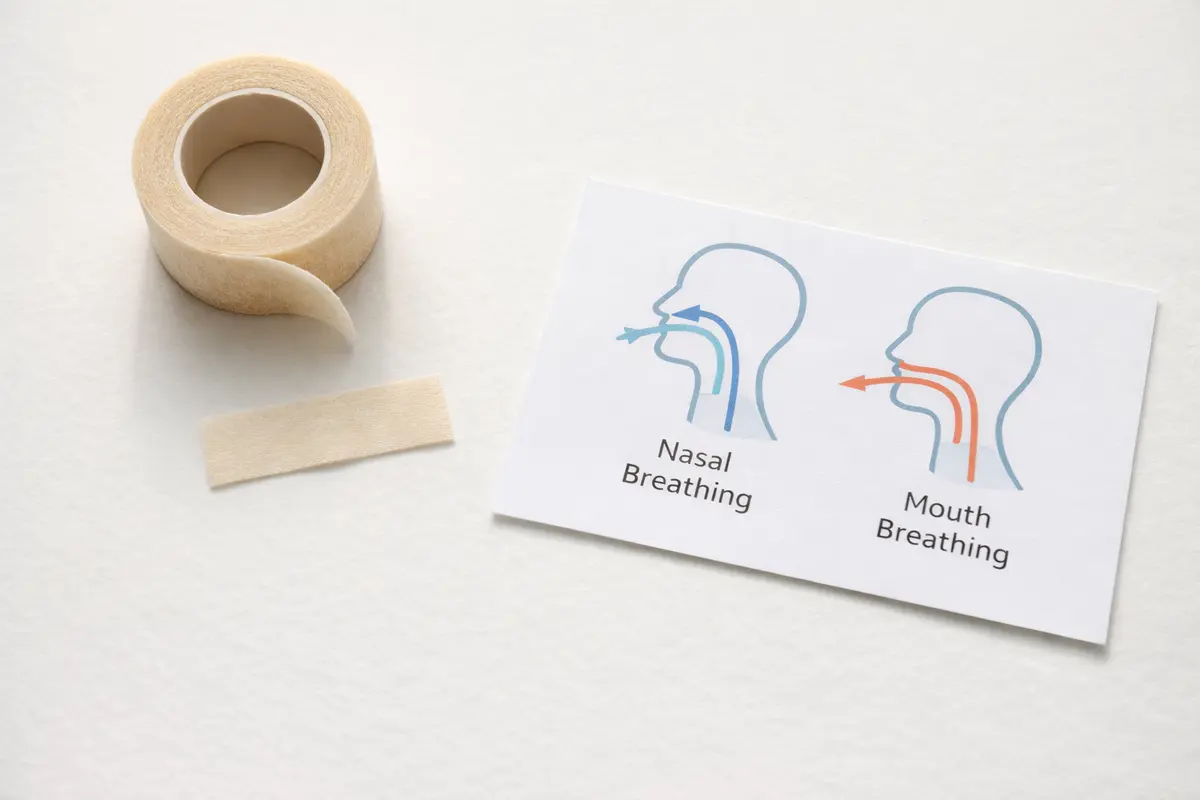
Nose breathing vs mouth breathing during sleep
Nasal breathing keeps the mouth and throat moist, maintains better oxygen saturation, and supports the natural sleep cycle. Mouth breathing dries out the tissues, can lower oxygen levels slightly, and tends to increase snoring and sleep fragmentation.
For most people, switching to nasal breathing at night — even gradually — leads to noticeably better mornings.
Is Mouth Taping Safe to Try?
Here’s where the conversation gets important — because mouth taping is not right for everyone.
For healthy adults who breathe through their mouth at night due to habit rather than a structural or medical reason, mouth taping is generally considered low risk. The tape sits over the lips, not the nostrils. You can still breathe through the sides if needed.
Who should not try mouth taping?
This is the part that often gets skipped in viral posts about the trend.
You should avoid mouth taping if you have untreated sleep apnea. Forcing nasal breathing when your airway is partially obstructed can make things significantly worse. If you snore loudly, wake yourself up gasping, or feel exhausted despite sleeping, get assessed for sleep apnea before trying any breathing intervention.
You should also avoid it if you have significant nasal congestion, a deviated septum, or any condition that restricts nasal airflow. Taping your mouth when your nose can’t do the job is not just ineffective — it can be genuinely distressing and unsafe.
When to talk to a doctor first
If you have any heart or respiratory conditions, if you take medications that cause drowsiness, or if you’re uncertain whether your nose can handle the full breathing load during sleep, speak to your GP before experimenting with this.
How to Start Mouth Taping at Night
If you’ve ruled out any contraindications and want to try it, starting slowly and carefully is the right approach.
What tape to use
Not all tape is suitable. You want something specifically designed for skin — micropore surgical tape or tape marketed for mouth taping both work well. Never use regular tape, duct tape, or anything with strong adhesive. The tape should come off easily in the morning without irritating your lips.
How to apply it
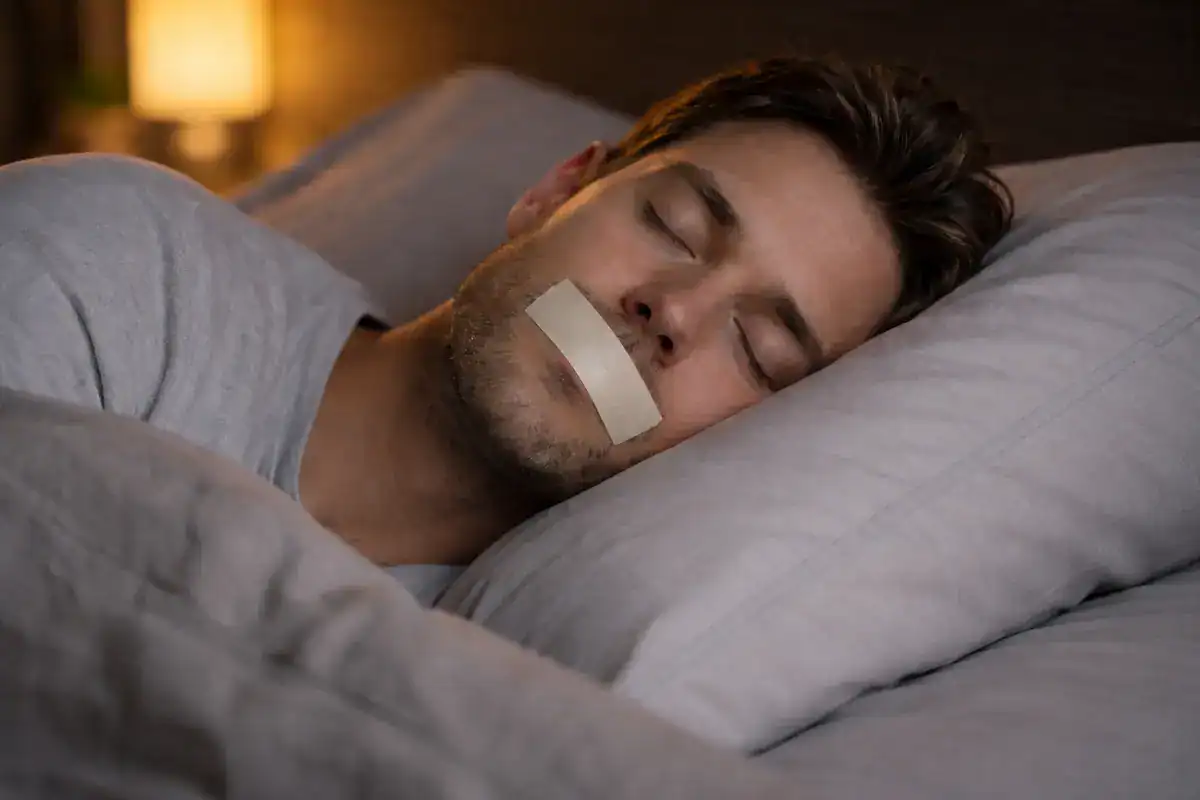
You don’t need to seal your mouth completely. Most people use a small horizontal strip across the centre of the lips — enough to encourage nasal breathing without feeling restricted. If that feels too intense, start by placing the tape vertically down the centre of your lips instead. This allows partial mouth opening if your body needs it.
Build up gradually
Start by wearing the tape while you’re awake — watching TV or reading — so your body gets used to the sensation before you sleep with it. Once it feels comfortable, try it during sleep for a few nights and see how you wake up.
Common Misconceptions About Mouth Taping
“Mouth taping cures sleep apnea.” It doesn’t. Sleep apnea is a structural and neurological issue — not simply a breathing habit. Mouth taping can reduce mouth breathing, but it cannot prevent the airway collapse that causes sleep apnea. Using it as a substitute for proper treatment can be dangerous.
“Any tape will do.” Definitely not. Using the wrong tape can cause skin irritation, discomfort, and make the experience unpleasant enough that you abandon it before giving it a fair chance. Skin-safe micropore or purpose-built mouth tape only.
“If it doesn’t work immediately, it’s not for you.” Your body may take a week or two to adjust to nasal breathing during sleep. Some people notice a difference the first night. Others need a couple of weeks of consistent use before the benefits become clear.
FAQ
Does mouth taping actually work for sleep?
For people who mouth breathe due to habit, yes — mouth taping can improve sleep quality, reduce snoring, and prevent dry mouth at night. The evidence is strongest for mild snoring and mouth breathing. It is less effective for snoring caused by structural issues or sleep apnea.
Is it safe to tape your mouth shut while sleeping?
For healthy adults without nasal obstruction or untreated sleep apnea, low-tack skin-safe tape is generally considered safe. The tape covers the lips, not the nostrils, so breathing is still possible. Anyone with respiratory conditions, sleep apnea, or significant nasal congestion should consult a doctor first.
What kind of tape should I use for mouth taping?
Use micropore surgical tape or tape specifically designed for mouth taping during sleep. These are gentle on the skin, breathable, and easy to remove. Never use standard household tape, packing tape, or any product with strong adhesive not designed for skin contact.
Can mouth taping help with sleep apnea?
Mouth taping is not a treatment for sleep apnea and should not replace CPAP therapy or other prescribed interventions. In some mild cases, it may reduce mouth breathing as a secondary symptom, but using it as a primary fix for sleep apnea is not supported by evidence and could be unsafe.
How long does it take for mouth taping to work?
Some people notice improvements — less dry mouth, reduced snoring, better mornings — within the first few nights. For others, it takes one to two weeks of consistent use. Results vary depending on how habitual the mouth breathing is and how well the nose can compensate.
Conclusion
Mouth taping for sleep is not a gimmick — but it’s also not magic. For the right person, it’s a simple and low-cost way to encourage nasal breathing, reduce snoring, and wake up feeling genuinely more rested.
The key is knowing whether you’re the right candidate before you try it, starting slowly, and using the correct tape for the job.
Subscribe for more tips to improve sleep and simple everyday solutions.