
If the idea of strength training feels intimidating because you don’t own equipment, this guide is for you.
Many beginners delay starting because they think weights, machines, or a gym membership are required.
That belief creates unnecessary friction.
The truth is simple:
Strength training without equipment works — especially for beginners.
This guide will show you:
- How bodyweight strength training actually works
- The best no-equipment exercises for beginners
- A simple routine you can do anywhere, anytime
No gym. No tools. No excuses. Just clear direction.
What Does Strength Training Without Equipment Mean?
Strength training without equipment means using your own body weight as resistance.
Instead of lifting weights, you use:
- Gravity
- Body positioning
- Controlled movement
Every time you squat, push, pull, or hold your body steady, your muscles are working against resistance.
That’s real strength training.
Why No-Equipment Strength Training Is Perfect for Beginners
For beginners, simplicity matters more than intensity.
Bodyweight training:
- Reduces injury risk
- Teaches proper movement patterns
- Builds joint and muscle control
- Makes consistency easier
When exercises feel accessible, you’re more likely to stick with them.
That’s why strength training for beginners without equipment is one of the safest ways to start.
Strength Training Benefits Without Equipment
You don’t miss out on benefits just because you skip weights.
Strength training without equipment helps you:
- Build muscle and endurance
- Improve balance and coordination
- Support posture and joint health
- Strengthen muscles used in daily life
Even short sessions can create noticeable improvements over time.
Core Strength Training Movements (No Equipment Needed)
5
All effective bodyweight programs are built around basic movement patterns.
1. Squat Movements
Works legs, glutes, and core.
Examples:
- Bodyweight squats
- Chair squats
These strengthen muscles used for sitting, standing, and lifting.

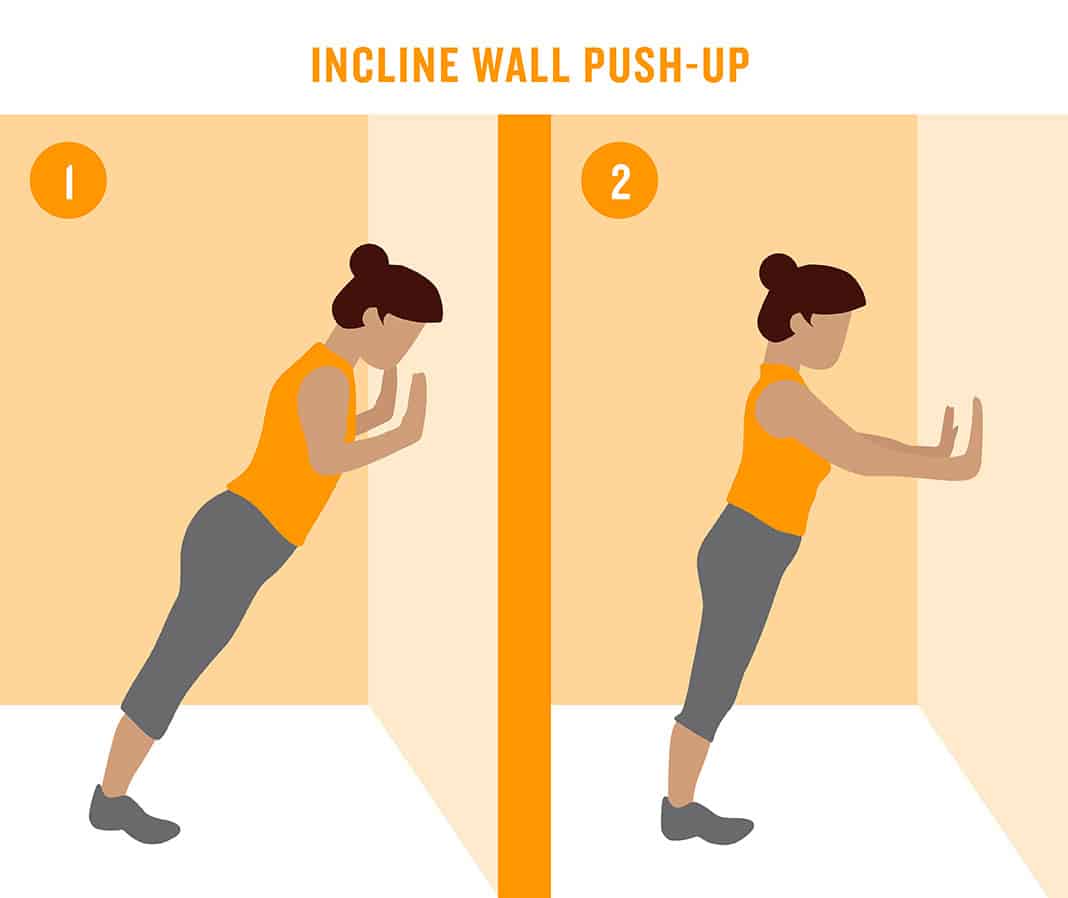
2. Push Movements
Works chest, shoulders, and arms.
Examples:
- Wall push-ups
- Knee push-ups
You control difficulty by changing body angle.
3. Pull Movements
Works back and arms.
Examples:
- Towel rows using a door or pole
- Isometric holds
Pulling movements balance pushing and improve posture.
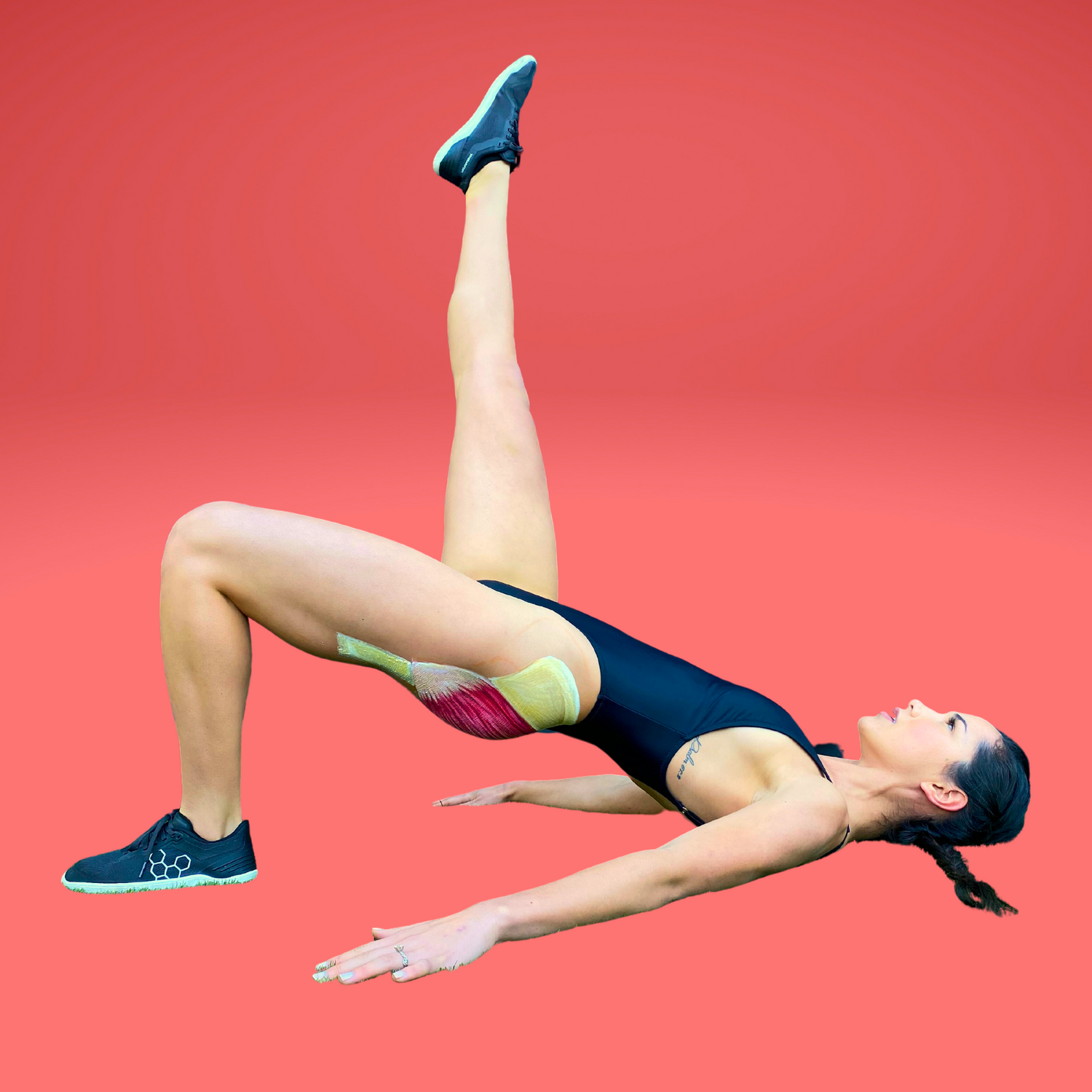
4. Hip Hinge Movements
Works glutes and lower back.
Examples:
- Glute bridges
- Hip hinges
These protect your lower back and improve stability.
5. Core Stability Movements
Works deep core muscles.
Examples:
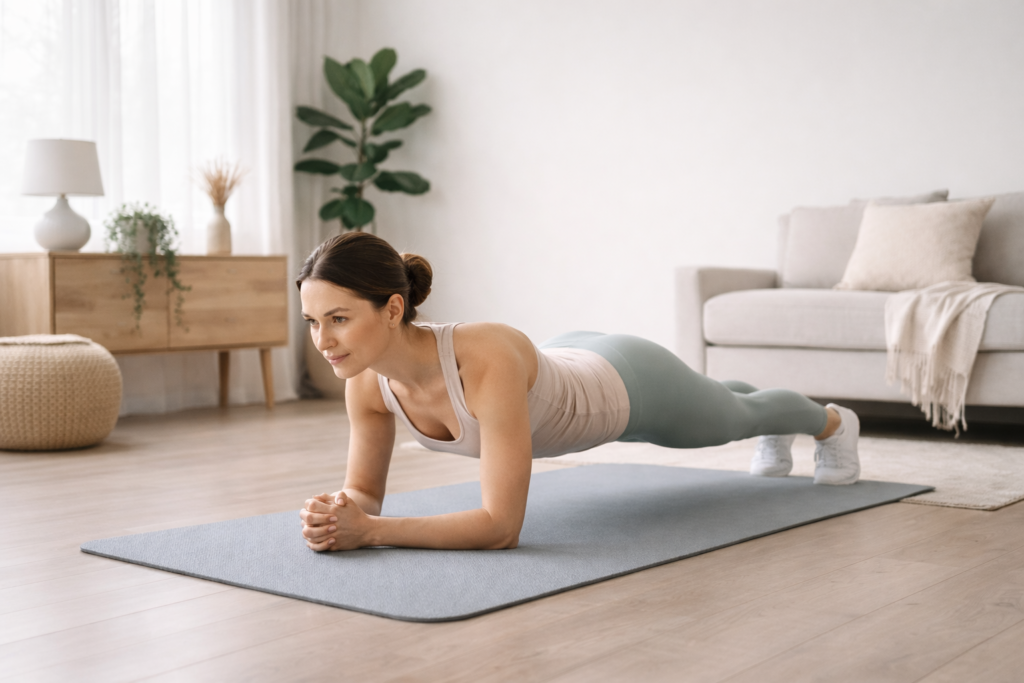
- Plank holds
- Dead bug variations
Core strength supports every other movement.
Strength Training Exercises Without Equipment (Beginner Routine)
Here’s a simple full-body routine you can do anywhere.
Do this 2–3 times per week.
- Bodyweight squats – 10 reps
- Wall or knee push-ups – 8–10 reps
- Glute bridges – 10 reps
- Standing towel rows – 10 reps
- Plank – 20–30 seconds
Rest 30–60 seconds between exercises.
Repeat the circuit 2 times.
This is a complete strength training example without equipment.
How to Progress Without Adding Equipment
Progress doesn’t require weights.
It requires better control.
You can make exercises harder by:
- Increasing repetitions
- Slowing down each movement
- Adding pauses at the hardest point
- Improving form and stability
Small changes create long-term results.
Common Beginner Mistakes With No-Equipment Training
Avoid these common issues:
- Rushing through exercises
- Skipping rest days
- Training every day without recovery
- Ignoring proper form
Consistency and control matter more than intensity.
Is Strength Training Without Equipment Safe?
For most beginners, yes.
It’s normal to feel:
- Mild muscle soreness
- Temporary fatigue
Stop if you experience:
- Sharp or sudden pain
- Dizziness
- Worsening joint discomfort
If you have health conditions or past injuries, consult a qualified professional before starting.
FAQ: Strength Training Without Equipment
Can you really build strength without equipment?
Yes. Bodyweight strength training builds muscle and strength when exercises are done consistently and with good form.
Is strength training without equipment good for beginners?
Absolutely. It’s one of the safest and most effective ways for beginners to start.
How often should beginners train without equipment?
Two to three full-body sessions per week are enough for beginners.
Do I ever need to add equipment?
Equipment can help later, but it’s not required to build a strong foundation.
Final Thoughts
You don’t need gear to get stronger.
You need simple movements and consistency.
Strength training without equipment removes barriers and builds confidence.
Start small. Train regularly. Progress gradually.
If this guide helped you,
subscribe for more beginner-friendly fitness and health guidance designed for real life.
