
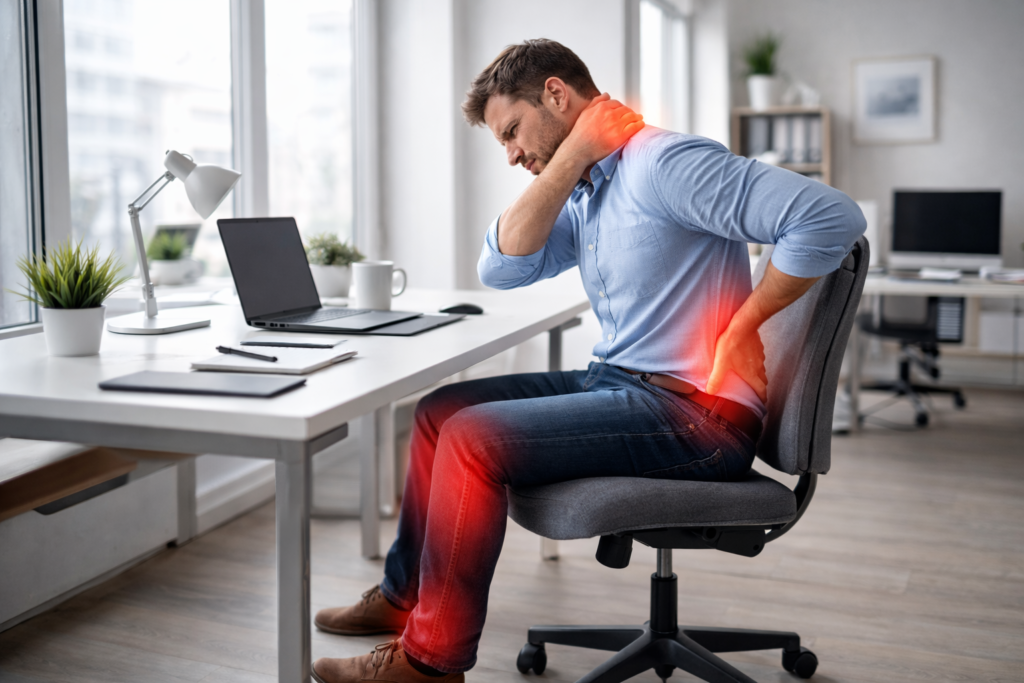
If you sit for most of the day and feel stiff, tired, or uncomfortable, you’re not alone and you’re not imagining it.
Long hours at a desk slowly affect the body, often in ways that feel confusing at first.
This guide explains the physical symptoms of sitting too much, why they happen, and what you can do to feel better without making extreme lifestyle changes. Everything here is simple, practical, and beginner-friendly.
Why sitting for long hours affects your body
The human body is built to move.
When movement is missing for hours at a time, several systems slow down.
Here’s what happens when you sit all day:
- Muscles stop activating properly
- Blood flow becomes slower
- Joints lose regular movement
- Posture slowly collapses
Over time, this leads to discomfort that feels “normal” but isn’t healthy.
What happens to my body if I sit all day?
Sitting all day doesn’t damage one single area, it affects the whole body.
Common changes include:
- Muscles becoming tight or weak
- Increased pressure on the spine
- Reduced circulation in the legs
- Lower energy levels
These changes build up slowly, which is why many people don’t connect their symptoms to sitting.
Common physical symptoms of sitting too much
Lower back pain and stiffness
This is one of the earliest signs.
When you sit, your lower back stays compressed and your core muscles stop supporting your spine.
Over time:
- Back muscles overwork
- Spinal discs take more pressure
- Pain becomes more frequent
This pain often feels worse after standing up or at the end of the day.
Neck and shoulder tension
Looking at a screen for hours encourages the head to move forward.
This adds extra strain to the neck and shoulders.
You may notice:
- Tightness at the base of the neck
- Shoulder stiffness
- Headaches that start late in the day
These symptoms are very common in desk workers.
Tight hips and leg discomfort
Sitting keeps the hips in a bent position for too long.
This shortens hip muscles and limits movement.
Symptoms include:
- Tight hips when standing up
- Leg stiffness
- Discomfort after long sitting periods
If ignored, this can affect walking and posture.
Poor posture and slouching
When muscles stay inactive, posture slowly breaks down.
You may notice:
- Rounded shoulders
- Slouched upper back
- Head leaning forward
Poor posture increases strain on the spine and muscles, leading to more pain over time.
Fatigue and low energy
Many people feel tired even without physical work.
This happens because:
- Blood flow slows down
- Muscles stay inactive
- Oxygen delivery becomes less efficient
Sitting for long hours side effects often include afternoon fatigue and mental fog.
How many hours of sitting is healthy?
There is no perfect number that works for everyone.
What matters most is how long you sit without breaks.
A practical guideline:
- Avoid sitting continuously for more than 30–60 minutes
- Stand up or move briefly several times a day
Sitting itself isn’t the enemy.
Long, uninterrupted sitting is.
How to reduce the effects of sitting all day
You don’t need a gym or special equipment.
Small, consistent actions work best.
Step 1: Break long sitting periods
Every 30–60 minutes:
- Stand up
- Walk for 1–2 minutes
- Stretch lightly
Set reminders if needed. Even short breaks reset your body.
Step 2: Add simple desk-friendly movement
Try these during the workday:
- Neck rolls
- Shoulder shrugs
- Seated spinal twists
- Standing hip stretches
These movements improve circulation and reduce stiffness.
Step 3: Improve posture without forcing it
Focus on:
- Feet flat on the floor
- Screen at eye level
- Back supported
- Relaxed shoulders
Avoid forcing yourself to sit perfectly straight all day.
Changing positions often is more effective.
Step 4: Add light daily activity
You don’t need intense workouts.
Simple habits help:
- Walk during phone calls
- Stand while checking messages
- Take a short evening walk
Consistency matters more than intensity.
How to recover from sitting too much?
Recovery doesn’t require drastic changes.
It’s about helping the body move again.
Helpful recovery habits:
- Gentle stretching in the evening
- Short walks after long sitting periods
- Light mobility exercises before bed
Most people feel improvement within days when movement becomes regular.
How to relieve leg pain from sitting too long?
Leg pain often comes from poor circulation and stiffness.
To reduce discomfort:
- Stand and move every hour
- Stretch calves and thighs
- Avoid crossing legs for long periods
- Take short walking breaks
If pain is severe or persistent, professional advice is recommended.
When symptoms are normal vs serious
Normal and common:
- Mild stiffness
- Temporary back or neck pain
- Tight hips that improve with movement
Get professional guidance if you experience:
- Pain lasting several weeks
- Numbness or tingling
- Sharp or worsening pain
- Pain that affects sleep
Listening to your body early prevents bigger problems later.
Simple daily routine for desk workers
This basic routine works for most people:
- Stand or stretch every 30–60 minutes
- Do 5 minutes of mobility twice a day
- Take one short walk
- Adjust posture when you remember
These small actions reduce most sitting-related symptoms.
Frequently Asked Questions
How to reduce the effects of sitting all day?
Break long sitting periods, move frequently, stretch tight muscles, and change positions often. Small movements done regularly are very effective.
How many hours of sitting is healthy?
There is no fixed limit, but avoiding sitting longer than 30–60 minutes without a break is recommended.
What happens to my body if I sit all day?
Muscles weaken, circulation slows, posture worsens, and fatigue increases over time.
How to recover from sitting too much?
Gentle movement, stretching, short walks, and consistent breaks help the body recover.
Final thoughts
The physical symptoms of sitting too much are common, but they’re not something you have to live with.
You don’t need extreme routines or major lifestyle changes.
You need regular movement, better awareness, and simple daily habits.
Move a little more.
Sit a little smarter.
Listen to your body.
👉 Subscribe for more health-related tips and simple, desk-friendly solutions to feel better every day.
