
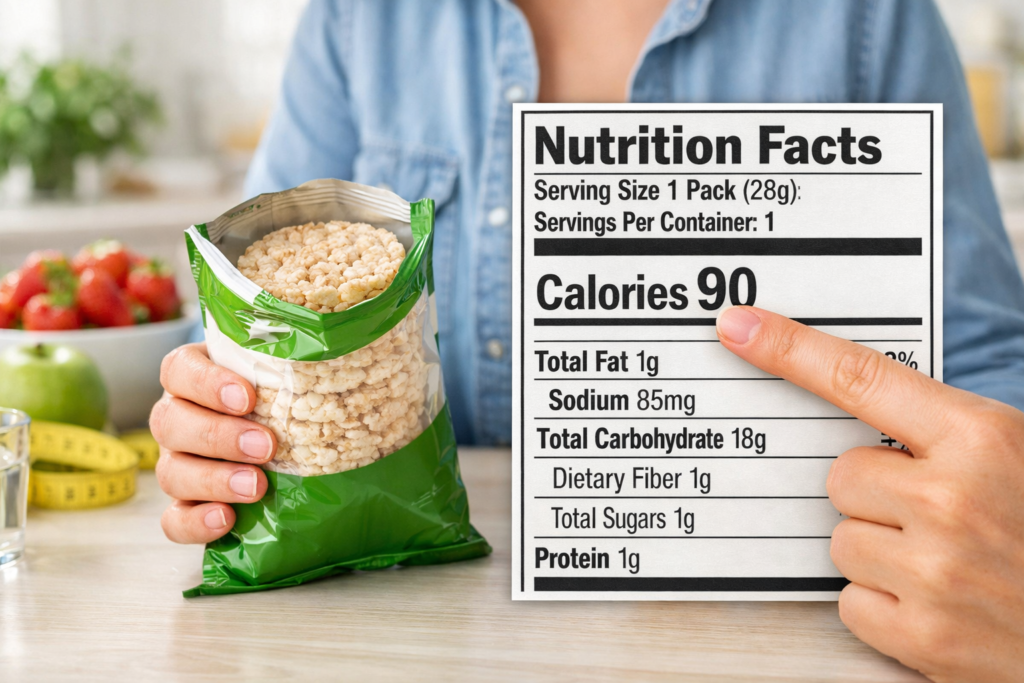
Losing weight should be simple. But for many people, it isn’t.
You work out regularly. You try to eat better. You choose foods carefully.
Yet the numbers printed on packaged foods often feel confusing.
That confusion leads to slow progress and frustrating results.
This guide will change that.
By the end of this article, you will know exactly how to read nutrition labels for weight loss. You will understand what really matters on a label and how to quickly decide if a food fits your goals.
Let’s begin.
Why Nutrition Labels Confuse People
Most people assume a label is only about calories.
Others think any food marked as healthy is good for dieting.
Some avoid labels completely and trust marketing claims.
These habits make weight loss harder than it needs to be.
Nutrition labels contain a lot of information in a small space.
Without knowing what to focus on, it feels overwhelming.
But once you know the system, it becomes easy to scan in seconds.
The label stops being scary. It becomes your best weight-loss assistant.
The Exact Food Label Basics You Must Know
Every nutrition label follows the same general format.
It lists:
- serving size
- calories
- nutrients like protein, carbs, and fats
- sugar, fiber, and sodium
These numbers help you compare foods logically.
They allow you to control how much you eat instead of guessing.
When you rely on packaged foods, learning to understand this panel is essential for real fat loss.
Step-by-Step: Reading Labels for Weight Loss
Below is the simple process you can follow for any food product.
Step 1 – Check the Serving Size First
Always start here.
The entire label is based on one serving.
If you ignore serving size, you misunderstand everything.
A small packet may contain two or three servings.
That means you could be eating double the calories without realizing.
Look carefully at:
- grams or pieces per serving
- total servings in the package
Then be honest about how much you actually eat.
This one step prevents most calorie mistakes.
Step 2 – Understand the Calorie Panel
Next, move to the calories section.
This is where you determine the energy content.
The number shown is calories per serving, not per pack.
To read nutrition labels to determine calorie content correctly:
- find calories per serving
- multiply by the number of servings you consume
Do this especially for snacks, drinks, and cereals.
For weight loss, compare calories between similar foods.
Choose the option that gives satisfaction with fewer calories.
Not the one that simply looks healthier.
Step 3 – Look at Protein Content
Protein is a major factor in successful weight loss.
Higher protein foods help you feel full longer.
They support muscle while you lose fat.
On the label, check grams of protein per serving.
Good targets for packaged foods:
- at least 8–15 grams for snacks
- 20 grams or more for main meals
If a food is very low in protein and high in calories, it may not be ideal for dieting.
Simple swaps toward better protein profiles make a visible difference.
Step 4 – Review Carbohydrates and Fiber
Carbs are not the enemy.
But the type of carbs matters.
Labels help you understand this easily.
Check:
- total carbohydrates
- dietary fiber
Fiber slows digestion and reduces hunger.
Foods with good fiber levels are more weight-loss friendly.
A helpful range:
- 3 grams or more fiber per serving for snacks
- 6 grams or more for breads and grains
If two products have the same calories, pick the one with more fiber.
This is the smart way to read labels for healthy eating and weight control.
Step 5 – Be Careful With Sugar
Sugar is where many people get tricked.
Packages often hide it behind sweet-sounding names.
The label reveals the truth.
Look for grams of added sugar.
For weight loss:
- under 5 grams per serving is great
- 5–10 grams is moderate
- over 15 grams is usually high
If a drink or snack is mostly sugar, it can quickly push you out of a calorie deficit.
That doesn’t make the food evil.
It just makes portion control very important.
Step 6 – Understand Fats Properly
Fats contain more calories per gram.
So high-fat foods must be judged carefully.
Check grams of total fat.
Then compare with calories.
If a product is very high in fat and low in fiber and protein, it may be easy to overeat.
Healthy fats like nuts and seeds are fine.
But they still count toward your calorie goal.
The label helps you balance them instead of guessing.
Step 7 – Scan Sodium and Hidden Extras
Sodium does not directly cause fat gain.
But very salty foods often encourage overeating.
They can also cause water retention.
For weight loss, prefer packaged foods with moderate sodium levels.
Also check any special notes like:
- sugar alcohols
- fiber additives
- ingredient quality
These help you compare products more intelligently.
Understanding Calories, Sugar, and Macros Together
A label becomes truly useful when you read all sections as a team.
Calories tell you the limit.
Protein and fiber tell you how filling it is.
Sugar and fat tell you how easy it is to overconsume.
Macros show whether the food supports your body.
This combined reading is what allows you to control your diet confidently even when you depend on supermarket foods.
Practical Real-Life Examples
Here is how you would use the system day to day.
Example – Breakfast Cereal
- The packet looks small
- But one bowl equals two servings
- Calories double instantly
Smarter move: choose a cereal with more fiber and protein per serving.
Example – Packaged Drink
- A bottle shows 110 calories
- But contains 3 servings
- Real intake: 330 calories
Better option: pick zero-sugar or single-serve drinks.
Example – Snack Bar
Compare two bars:
Bar A:
- 210 calories
- 6 grams protein
- 18 grams sugar
Bar B:
- 200 calories
- 12 grams protein
- 7 grams sugar
Clearly Bar B supports weight loss better.
No marketing needed. Just numbers.
Special Focus: How to Read an Indian Nutrition Label
Indian packaged foods follow FSSAI labeling rules.
The format is the same, but units are often in:
- calories per 100 grams
- or per defined serving size
Always check whether:
- the label is per 100g or per serving
- how many servings are in the pack
This distinction is especially important in India.
Once you understand it, comparing Indian foods becomes easy and logical.
When a Food Label Helps You Most
Nutrition labels help you:
- compare similar products
- stay within calorie targets
- avoid hidden sugar traps
- choose filling foods
They are most useful for:
- snacks
- ready-to-eat meals
- grocery items
- fitness foods
Learning this skill puts you in full control of your weight-loss journey.
A Simple Daily Filtering Method
Whenever you pick up a product:
- Read the serving size
- Check calories per serving
- Look for good protein
- Prefer higher fiber
- Keep sugar moderate
If the food passes most of these, it fits well into a weight-loss plan.
This is the practical way to scan labels in under 10 seconds.
FAQ Section
How do you read nutrition labels for weight loss?
Start with serving size. Then check calories per serving. Compare protein, fiber, sugar, and fats together. This ensures you understand the real impact of the food you eat.
How to read nutrition labels on food?
Look at the nutrition information panel instead of the front packaging. Focus on serving size, calories, and macros. Use the numbers to compare products logically.
How can you read nutrition labels to determine calorie content?
Find the calories listed for one serving. Multiply that number by the servings you consume. This gives the true calorie intake.
Are carbs on nutrition labels bad for weight loss?
No. Carbs are normal nutrients. What matters is the total calories and the amount of fiber and protein that come with those carbs.
Should I trust foods marked as healthy without checking the label?
Not completely. Marketing claims can be misleading. The nutrition label shows the real facts needed for confident decisions.
How to read an Indian nutrition label?
Check whether the values are listed per 100 grams or per serving. Then follow the same method of reviewing calories, protein, fiber, sugar, and fats.
Final Thoughts
Weight loss becomes easier when confusion is removed.
Nutrition labels are simple once you know what to focus on.
Instead of guessing whether a food is helping you lose weight, you can rely on clear numbers.
That clarity leads to faster and more confident progress.
Call to Action
You don’t need to fear nutrition labels anymore.
Use this step-by-step method whenever you shop and eat.
Small daily decisions add up to real weight loss.
Subscribe for more health-related tips and simple solutions that help you stay in control of your body and your goals.
