
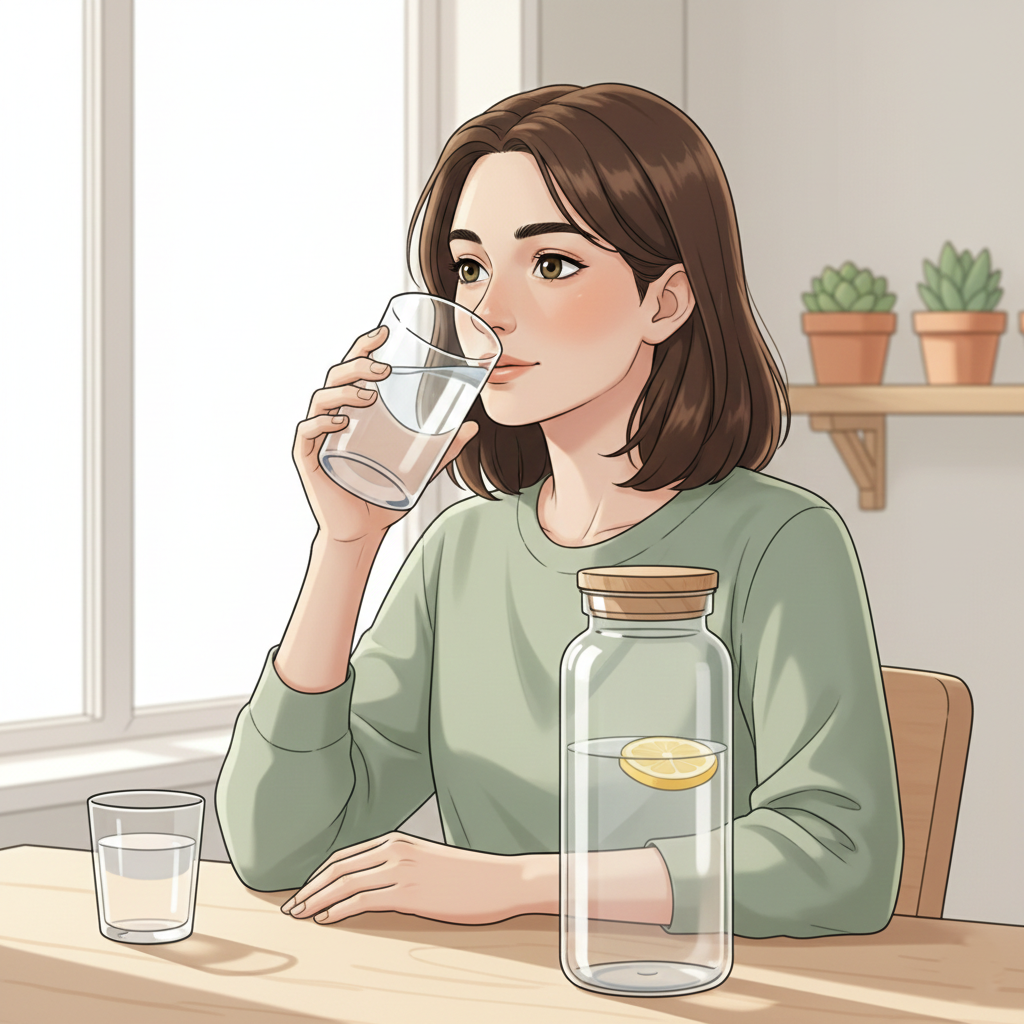
You’ve probably heard about a million different answers by now.
Eight glasses. Two liters. “Drink when you’re thirsty.” “Drink way more if you work out.”
No wonder it feels confusing.
If you’ve ever caught yourself wondering how much water should you drink daily, this guide is for you.
Not a rigid rulebook. Not a medical lecture.
Just a simple, practical way to understand what your body actually needs, and how to tell if you’re getting enough.
By the end of this, you’ll walk away with clarity, not just more guesses.
Why Daily Water Intake Matters More Than You Think
Water isn’t just about putting out the thirst fire.
It quietly helps a lot of the “background systems” in your body:
- Move nutrients around so your cells get what they need
- Regulate your body temperature so you don’t overheat or get too cold
- Support digestion and steady energy levels
- Keep your brain alert, focused, and less foggy
When daily water intake for good health is too low, small things suddenly feel harder.
Your energy dips, your concentration wavers, and you may even feel more irritable than usual.
That’s why good hydration matters far more than hitting some trendy number on a label.
How Much Water Should You Drink Daily?
Here’s the honest truth:
There is no single perfect amount that fits everyone.
Your ideal intake shifts depending on:
- Your body weight
- How active you are
- The climate where you live
- What you eat, especially salty or high‑protein foods
That’s why asking “how much water to drink in a day” without context usually leaves people more confused than helped.
A small, less active person living in a cool climate simply doesn’t need as much as someone who’s heavier, very active, or sweating a lot in hot weather.
Instead of chasing one fixed rule, it helps to think in ranges, and to pay attention to the signals your body sends.
How Much Water Should You Drink Daily Based on Weight?
One simple guideline many people find useful is:
👉 About 30–35 ml of water per kg of body weight per day
To put that in real‑life terms:
- 60 kg → roughly 1.8–2.1 liters
- 70 kg → roughly 2.1–2.4 liters
- 80 kg → roughly 2.4–2.8 liters
This isn’t a hard rule carved in stone, it’s just a starting point.
Your actual needs will go up if you’re:
- Exercising a lot
- Sweating in heat
- Drinking caffeine
- Eating salty or processed foods
Those factors increase how much water should you drink daily based on weight and lifestyle, not just on the scale.
How Much Water Should You Drink Daily in Litres?
If you think better in liters, here’s an easy reference range:
- Most average adults: about 2–3 liters per day
- Active adults or people in hot climates: more than 3 liters
- Smaller or less active adults: closer to around 2 liters
And don’t forget: you don’t get all your water from bottles.
Food, especially fruits, vegetables, soups, and broths, also contributes.
So if you’re right around 2–3 liters from drinks plus water‑rich foods, that’s already a pretty solid daily water intake for good health.
Signs You’re Probably Drinking Enough
Wondering if you’re actually on target?
Your body already talks back.
You’re probably drinking enough if:
- Your urine is pale yellow (like light straw)
- You don’t feel constantly drained or heavy
- You can focus without heavy brain fog
- You rarely feel dizzy or lightheaded
Hydration isn’t about hitting “perfect.”
It’s about being consistent and feeling like your body is working with you, not against you.
Simple Habits to Stay Hydrated Without Overthinking
You don’t need apps, constant alarms, or hourly tracking.
Small, easy habits build up into real results over time.
Try one or two of these:
- Drink one full glass of water after waking up, before coffee
- Sip water before each meal (even a few mouthfuls helps)
- Keep a water bottle within sight and within reach
- Drink more when you move more, before, during, or right after activity
Small habits beat strict rules almost every time.
If you ever want a more detailed picture of how much water should you drink daily in litres based on age, lifestyle, or health goals, you can check out our full pillar guide on daily water intake and hydration basics.
Common Misconceptions About Drinking Water
Let’s clear up a few myths that often make people second‑guess how much water should you drink daily:
“If I’m not thirsty, I’m fine.”
Thirst is usually a lagging signal, not your body’s first “top‑up” notice. Mild dehydration can happen even when you don’t feel strongly thirsty.
“More water is always better.”
Drinking way too much too quickly can be uncomfortable and unnecessary. Balance and steady sipping usually matter more.
“Coffee and tea don’t count.”
They do add fluid to your system, but they’re not a full replacement for plain water. Caffeine can also increase the amount of water you pee out.
“Clear urine means I’m overdoing it.”
Very pale or clear urine is usually just a sign of good hydration. Overhydration is rare and typically only a concern in specific situations, like intense, very fast water intake during extreme activities.
When you clear up these misconceptions, it’s easier to trust your own body instead of worrying about “getting it wrong.”
FAQs
Is 2 liters of water a day enough?
For many people, yes. For others, especially those who are active, hot, or heavier, it may be too little. Body weight and activity level matter more than any preset target.
Should I drink water even if I’m not thirsty?
Yes, especially if you’re busy, moving a lot, or in a warm climate. Drinking water proactively helps keep your energy, focus, and mood stable.
Can drinking more water increase energy?
Yes. Even mild dehydration can cause tiredness and muddled thinking. Better daily water intake often brings noticeably more consistent energy and clarity.
Is it okay to drink most of my water at once?
It’s better to spread your intake throughout the day for steady, comfortable hydration. Gulping most of it in one go can feel heavy on your stomach and won’t support your body as smoothly.
Conclusion
So, how much water should you drink daily?
Enough to support your body, not a random number or a rigid rule.
That means paying attention to your weight, activity level, and the way you feel from day to day.
Drink water consistently.
Tweak when your routine changes.
When hydration becomes a simple habit instead of a constant question, everything else, your energy, your focus, your mood, can start to feel a little easier and a lot more in your control.
