


You’ve been told drinking more water will fix your skin…
But what if that’s only half the truth?
But when breakouts stick around and dry patches won’t budge, it’s easy to feel like it’s all marketing hype.
So the real question becomes: does drinking water improve skin, or is it just another wellness story that sounds too good to be true?
This article cuts through the noise and explains what drinking water daily for better skin actually does, what it doesn’t do, and how to use hydration as one realistic part of your routine, without empty promises.
How Drinking Water Affects Your Skin
Drinking water helps keep your skin hydrated, but it does not directly clear acne or fix skin problems on its own. Healthy skin depends on hydration, diet, skincare, and overall lifestyle.
When you’re properly hydrated:
- Blood circulates more easily
- Nutrients reach your skin cells more efficiently
- Waste products and toxins are carried away more smoothly
This doesn’t mean water magically repairs your skin overnight.
But it does create the conditions for your skin to function the way it’s designed to.
That’s where the calm, steady benefits of drinking water for skin really come in.
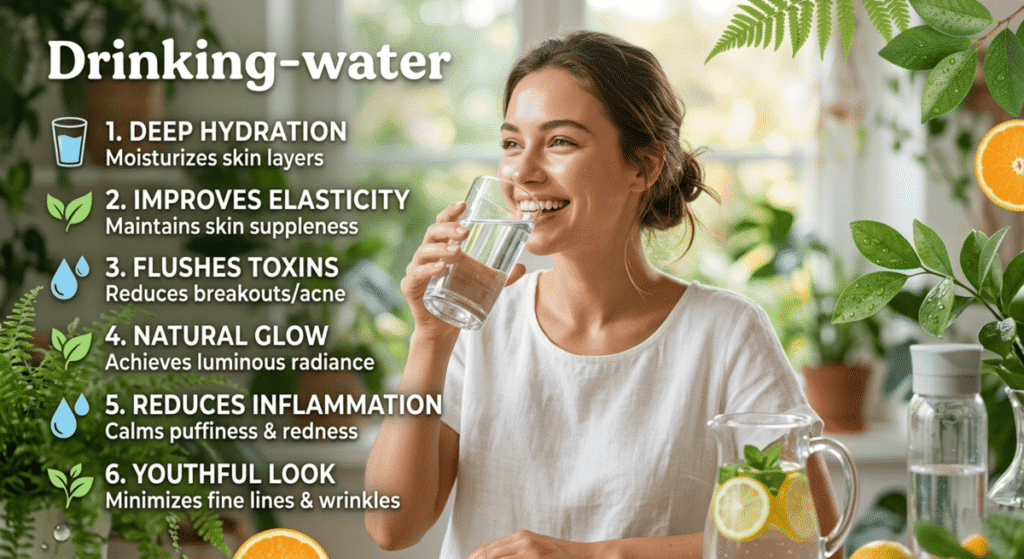
Does Drinking Water Improve Skin Appearance?
Yes, but it has limits.
Drinking enough water can help:
- Reduce dryness and flakiness
- Improve skin elasticity
- Support a more even, healthier-looking complexion
However, water alone won’t:
- Cure acne or hormonal breakouts
- Erase wrinkles or deep lines
- Replace the basic essentials of skincare or a nourishing diet
Think of hydration like the foundation of a house.
Drinking water benefits for skin by supporting everything else (cleanser, moisturizer, sunscreen, diet), but it’s not the entire structure on its own.
What “Glowing Skin” Actually Means
When people talk about “glowing skin,” they usually don’t mean Hollywood‑level perfection.
Most of the time, they’re talking about skin that looks:
- Smooth and soft
- Plump and hydrated
- Even‑toned and less dull
Daily water intake for glowing skin helps by improving hydration from the inside out.
Dehydrated skin can look tired, flat, and washed out, even when it’s not damaged or medically “bad.”
Hydration doesn’t add glow.
It simply removes the dullness that was hiding it in the first place.
How Much Water Should You Drink a Day for Better Skin?
There’s no single magic number that guarantees perfect skin.
Your needs change based on:
- Your body weight
- How active you are
- The climate where you live
- What you eat (especially salty or processed foods)
A simple, realistic guideline many people use is:
- About 2 to 3 liters per day for most adults
- More if you sweat a lot, exercise frequently, or live in hot, dry weather
If you want a clearer, more personalized idea of how much water should you drink a day for better skin, our pillar guide on daily water intake explains how to fine‑tune this based on body weight and lifestyle.
Signs Your Skin May Need More Water
You don’t need to guess or overanalyze.
Your skin often gives you subtle hints that it might be craving more hydration.
Common signs include:
- Tightness or pulling after washing your face
- Dull, flat, or uneven skin tone
- Fine lines that look more noticeable
- Makeup settling into dry patches or flakiness
These signs don’t always mean dehydration is the only culprit.
But if your skin feels off in these ways, checking your water intake is one of the simplest and smartest first steps.
Simple Habits That Support Better Skin Hydration
You don’t need complicated rituals here.
Small, consistent habits that support drinking water daily for better skin usually work better than occasional “water marathons.”
Try one or two of these:
- Drink water steadily throughout the day, not in huge gulps at once
- Start each morning with a glass of water before coffee
- Pair internal hydration with a good moisturizer to lock hydration into the skin
- Eat water‑rich foods like cucumbers, tomatoes, watermelon, oranges, and leafy greens
Your skin benefits the most when you think of hydration as a daily rhythm, not a surprise event.
Common Myths About Water and Skin
Let’s clear up a few persistent beliefs around drinking water daily for better skin:
“The more water I drink, the clearer my skin.”
Not exactly. Acne and breakouts are influenced by hormones, bacteria, skincare products, diet, and stress; water can support skin health, but it’s rarely the only solution.
“If I drink enough water, I don’t need moisturizer.”
False. Internal hydration and external moisturizer work best together. Drinking water keeps your skin cells hydrated, and moisturizer helps prevent that water from escaping too quickly.
“Drinking water detoxes my skin.”
Your body’s detox system is mostly run by your liver and kidneys. Water supports them, sure, but it doesn’t “detox” your skin the way many influencers imply.
Clearing up these illusions helps you use water as a helpful tool, not a miracle fix.
FAQs
Does drinking water clear acne?
It can improve overall skin health and hydration, but acne usually needs targeted skincare, gentle cleansing, and sometimes lifestyle or medical support to really change.
How long does it take to see skin benefits from drinking more water?
Some people feel better‑hydrated within a few days. Visible changes, like less dryness or a more even tone, often appear after about 1–2 weeks of consistent drinking water benefits for skin.
Can drinking too much water harm skin?
Drinking excessively won’t improve your skin beyond a certain point and may cause discomfort. For most people, balance and regular intake are far more important than huge, sudden amounts.
Conclusion
So, does drinking water daily for better skin actually work?
Yes, but not in the exaggerated, instant‑magic way you see online.
Drinking water daily for better skin supports hydration, elasticity, and a more balanced, healthy appearance.
It won’t replace your skincare routine or fix every concern, but it does create the internal foundation that makes everything else work better.
If your skin feels dull, tight, dry, or lifeless, simply paying a little closer attention to how much water you drink, and choosing steady, realistic daily water intake for glowing skin, can make a small but very visible difference over time.