
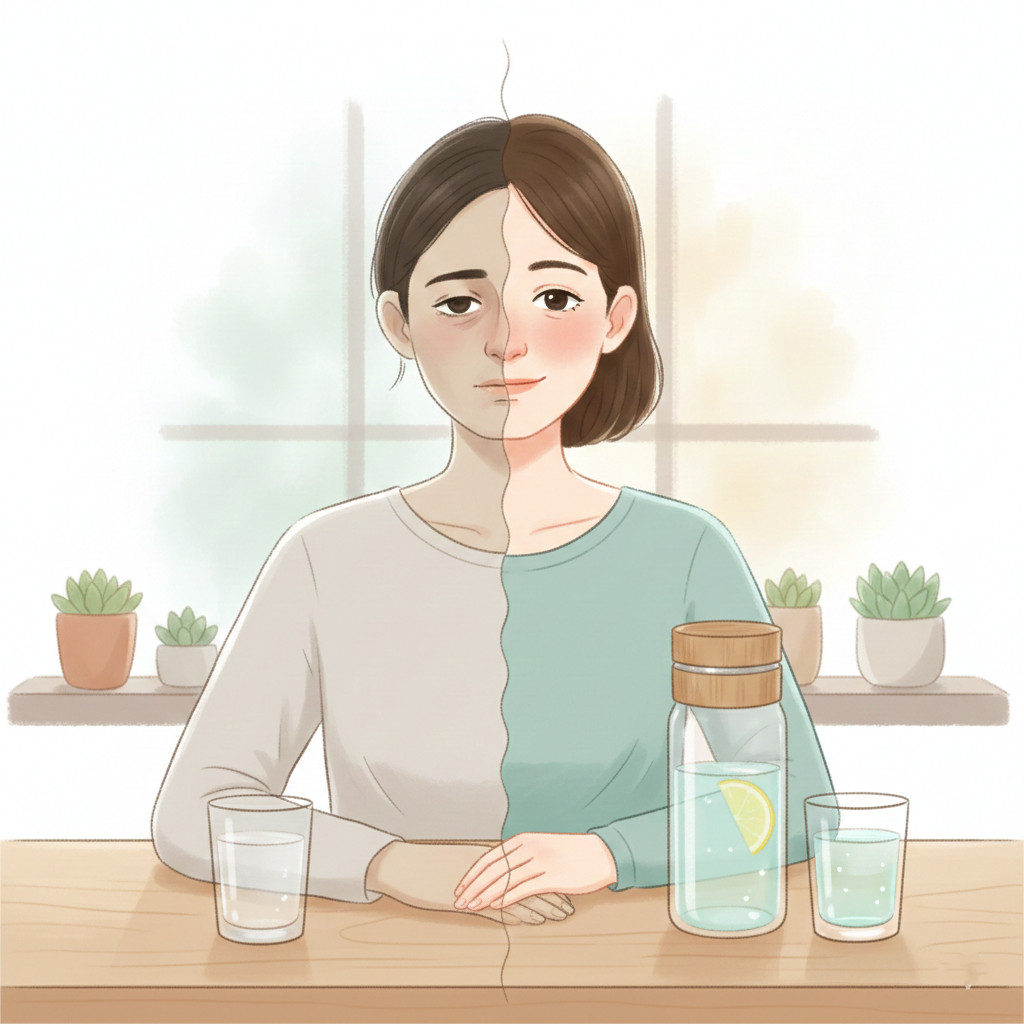

You think you’re drinking enough water…
But what if your body is quietly struggling without you realizing it?
But so many of us drag around feeling a little “off” all day, tired, foggy, dry, without realizing we’re actually mildly dehydrated.
No big drama. No obvious emergency. Just a quiet mismatch between what your body needs and what you’re giving it.
This article helps you spot the clearest signs you’re not drinking enough water, decode what your body is trying to tell you, and start working with your own hydration, not against it.
No medical jargon.
Just simple, practical clarity.
How Much Water Do You Really Need Daily?
There’s no magic number that fits everyone.
Your water needs change with your body weight, how active you are, the climate you live in, and even what you eat, salty or high‑protein meals push your need for water higher.
That’s why “eight glasses a day” often ends up more confusing than helpful.
Instead of obsessing over a fixed number, your body talks to you.
If you learn to read the signals, dry mouth, dark urine, fatigue, it becomes way easier to know whether your daily water intake is actually supporting your health or quietly working against it.
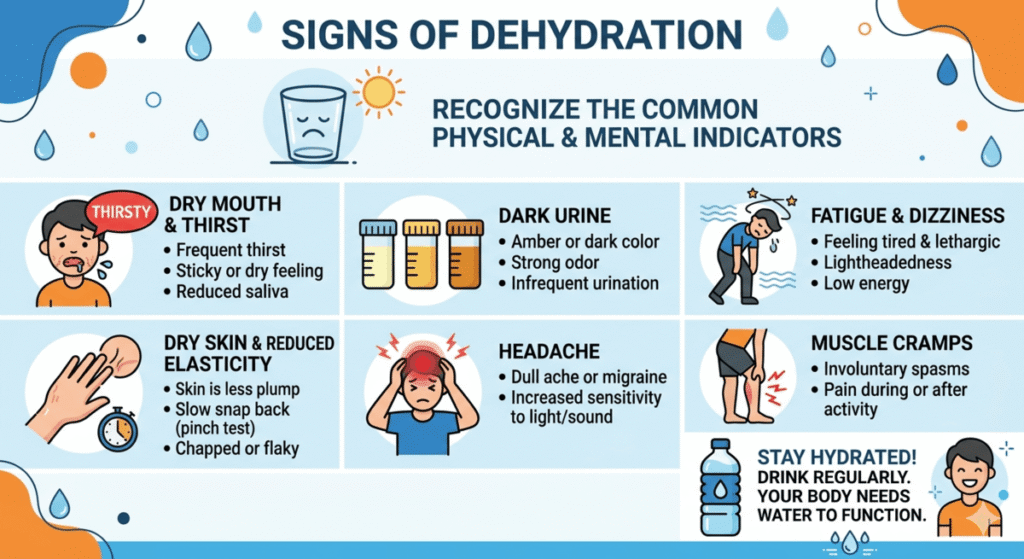
7 Signs You’re Not Drinking Enough Water
1. You Feel Tired Even After Rest
One of the earliest symptoms of not drinking enough water is that stubborn tiredness.
You slept. You ate. But you still feel drained.
When you’re even slightly dehydrated:
- Blood volume drops a little
- Oxygen and nutrients move more slowly through your body
- Your muscles and organs have to work harder for basic things like walking, thinking, or concentrating
So even if you did rest, your body is laboring more than it should, and that shows up as low energy, heaviness, or a general “blah” feeling.
2. Your Urine Is Dark Yellow
This is one of the most honest signs that you’re not drinking enough water.
When you’re well hydrated, your urine is usually pale yellow, almost like straw.
Darker yellow or amber color means your body is concentrating your urine to save water, it’s conserving what little fluid you have.
It’s not glamorous, but it’s clear, reliable, and surprisingly accurate for everyday use.
3. Frequent Headaches or Lightheadedness
Dehydration changes how much blood flows to your brain.
Even mild fluid loss can push your brain into “low operating power” mode.
That’s one reason so many people get headaches or feel lightheaded, especially on busy workdays.
If your headache starts to ease after drinking a big glass of water, that’s a strong hint dehydration was part of the story.
4. Dry Skin, Lips, or Eyes
Your body sorts priorities when water is low.
It keeps the brain and heart running before it sends water to your skin.
That’s why side effects of not drinking enough water often show on the outside first:
- Dry, tight, or flaky skin
- Chapped or cracked lips
- Gritty or irritated eyes
Moisturizer and eye drops can help, but they only treat the surface.
Drinking water supports hydration from the inside out, which makes a noticeable difference over time.
5. You Rarely Feel Thirsty (But Still Feel Off)
Here’s a sneaky one:
Thirst is usually a late signal, not an early one.
Over time, many people stop noticing their thirst cues, especially if they’re busy, relied on caffeine all day, or just haven’t tuned in.
So it’s totally possible to feel “not quite right”, tired, foggy, moody, without feeling that classic “get me water” urge.
This is when body awareness matters more than waiting for thirst.
6. Muscle Cramps or Joint Stiffness
Water doesn’t just help inside your organs, it’s literally the lubricant for your muscles and joints.
It also helps balance electrolytes, which keep your muscles firing smoothly.
When side effects of not drinking enough water start to show:
- Muscles may cramp more easily, especially at night or after activity
- Joints can feel stiff, “grind‑y,” or slow to warm up
If this happens often, think hydration before blaming age or overuse.
7. Brain Fog and Poor Concentration
If your thoughts feel slow, blurry, or scattered for no clear reason, dehydration might be part of the puzzle.
The effects of dehydration on the body include:
- Reduced blood flow and oxygen to the brain
- Slower nerve signaling
- A drop in cognitive performance, even before you feel “truly dehydrated”
That’s why so many people notice their focus, memory, and decision‑making improve within hours or after a day of drinking more water.
What Happens If You Don’t Drink Enough Water Long‑Term?
It’s normal to be slightly dehydrated now and then, especially on hot days, after exercise, or on chaotic busier days.
But when the pattern continues over months or years, what happens if you don’t drink enough water can start to build up:
- Persistent fatigue or low energy
- More digestion issues, like constipation
- Extra strain on your kidneys
- More frequent headaches
- Poorer temperature regulation (you overheat or feel too cold more easily)
These changes sneak in slowly, which is why many people never connect them to hydration, until they start paying attention and see how much better they feel when they bring that water intake up.
Simple Ways to Improve Daily Hydration
You don’t need a complicated habit tracker or hourly alarms.
Small, realistic changes work best when you’re trying to fix symptoms of not drinking enough water.
Try one or two of these:
- Drink one full glass of water as soon as you wake up
- Keep a water bottle visible on your desk, kitchen counter, or bag
- Drink water before every meal
- Sip consistently throughout the day, instead of guzzling a huge amount all at once
Steep hills of water don’t help as much as a gentle, steady stream. And if you ever want a more detailed breakdown of how much water you should be drinking each day based on weight, age, and activity, check out our full guide on daily water intake.
Common Misconceptions About Drinking Water
Here are a few myths that trip people up and make it harder to recognize the side effects of not drinking enough water.
“I’m not thirsty, so I’m hydrated.”
Thirst isn’t your body’s first cue, if you’re waiting for it, you’re often already a bit behind.
“Coffee and tea don’t count.”
They do add fluid, but they’re not a full replacement for water. Caffeine can also make you pee more, which increases your real water need.
“Clear urine means I’m overhydrated.”
Very clear urine is usually just a sign that you’re well hydrated, not that you’re drinking too much.
Overhydration is rare and usually happens only if you’re flooding with water very quickly under unusual circumstances.
Clearing up these ideas makes it easier to trust your own body’s signals instead of following random rules.
Quick FAQs
Is 2 liters of water a day enough?
For some people, yes. For others, especially those who are active or live in hot climates, it’s not enough.
Your body weight and activity level matter far more than any fixed target like 2 liters.
Can dehydration cause anxiety or mood changes?
Yes. Dehydration can affect stress hormones and how your brain handles emotions, which is why some people feel more irritable, anxious, or edgy when they’re low on fluids.
How fast does hydration improve symptoms?
Many people notice headaches, brain fog, or tiredness improve within hours of drinking more water, especially if they were mildly dehydrated.
Other effects, like smoother digestion or better skin, can take a few days of consistent hydration.
Conclusion
Your body is always sending you messages.
Fatigue, headaches, dry skin, brain fog, muscle cramps, and frequent lightheadedness aren’t random bad luck.
More often than we realize, they’re early warnings that you’re not drinking enough water, and simple signs you’re not drinking enough water can be easier to read than you think.
Instead of chasing a “perfect” number on paper, try tuning in to what your body feels like throughout the day.
Drink water consistently, notice the changes, and make this the habit that quietly upgrades how you feel, inside and out.
Sometimes the simplest habit you can change, drinking enough water every day, ends up making the biggest difference.